
The winner in this bloodbath

Being sidelined is often seen as a weakness.
But in truth, it’s discipline. You’re waiting for risk vs. reward to tilt in your favor instead of bleeding out in chop.
You’re folding garbage hands and waiting for pocket aces.
Here’s what we got today:
- Stream Crash explained. And what can we learn from it?
- The comeback of $ZK Stack. New tokenomics & Atlas upgrade.
- Around the web. Ripple raised from Citadel, Monad mainnet date is out, Lido’s new vault strategies, and more.
Here’s your Edge 🗡️!
Insights
Lessons from the Stream Crash
The first big protocol casualty of the 10/10 disaster is here.
Stream Finance, a DeFi yield protocol claiming over $520M TVL, just imploded.
Their “stablecoin,” xUSD, was marketed as delta-neutral. But after losing $93M, xUSD now trades around ~$0.14.
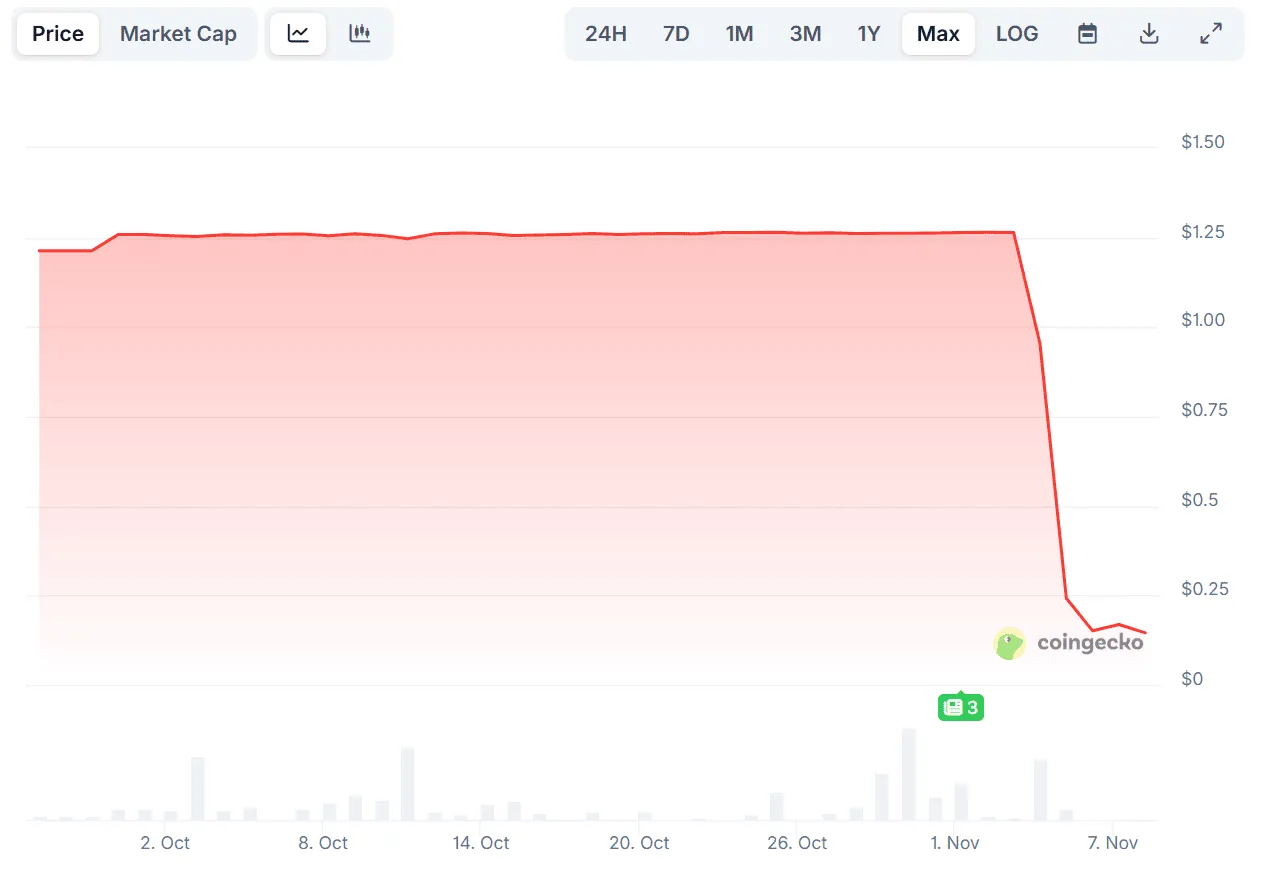
What happened? Stream Finance announced its loss of $93 million in Stream fund assets. All withdrawals and deposits were also suspended.
The “market neutral” strategy Stream was supposed to run wasn’t market neutral at all. The trading strategies run by Stream blew up, and users lost their funds.
It’s safe to say that the 10/10 disaster contributed to these “strategies” failing. You can read more about the exact strategies used by Stream Finance here.
But this event taught us some good lessons.
#1. Many stablecoins are not “true stablecoins.”
Stablecoins should always hold value. They should be backed by top-tier collateral and deep liquidity.
But most aren’t. They’re risky yield schemes wearing a “stable” mask to attract deposits.
The issue: many DeFi protocols hardcode these coins to $1, creating systemic fragility.
The problem with fake stablecoins is that many lending pools will hardcode them to $1. This will create fragility in the system.
#2. Transparency & verifiability are the core value proposition of DeFi.
The whole disaster felt like the CeFi blowup of last cycle. We gave money to some people who promised high returns. They took too much risk to create high returns. And everything blew up in our faces.
Stream was claiming to run market-neutral strategies. But those strategies were not market neutral. Behind everyone’s backs, they were investing in proprietary, non-transparent, off-chain strategies.
Ideally, we shouldn’t have to trust protocols to do as they say. We should be able to verify their claims.
Since Stream didn’t have transparency, many people suspect Stream of misappropriating funds.
#3. Composability & Contagion Risks
Composability allows protocols to build on top of each other. And many DeFi protocols had been built on top of xUSD/xBTC/xETH.
- Elixir’s deUSD crashed to $0.02.
- Many curators like MEV Capital and Re7 were also affected.
- TVL of curator-based lending platforms like Morpho and Euler dropped massively.
There’s a long list of protocols affected by the depeg. You can see a much longer list here, but even that’s not comprehensive.
This event shows how composability in DeFi can lead to a contagion.
In DeFi, you might have exposure to protocols that you have no idea about. For example, many depositors into Beefy USDC vault had no idea about their xUSD exposure.
#4. Hardcoding “stablecoins” to $1 is a tradeoff.
Many stablecoins are hardcoded to $1 in many places. This meant that many lenders/pools/protocols were accepting collateral worth a lot nominally, but worth much less in reality.
Leverage looping further increases this issue. Even Stream was employing the strategy to earn yield.
TLDR: Hardcoding prices creates fragility in the system.
On the other hand, letting price be dictated by the local market also has its problems. Recently, USDe had lost $1 peg on Binance, which led to many liquidation cascades.
There are viable solutions that address the weaknesses of both situations. Those should be implemented.
#5. Where’s the yield coming from?
Curators are people who manage vaults to generate yield for users. Now, there’s a debate between lending protocols like Aave that handle risk management by themselves and protocols like Morpho that have permissionless curators.
With platforms like Morpho, where anyone can be a curator, you shouldn’t just ape into the largest APY vault on Morpho. You should look at the curators and evaluate the vault on a case-by-case basis before depositing.

Latest issue
Metric that drives winning tokens
Welcome to Black October. In under two weeks, an AI found a bug that exposes the PHP software running 70% of websites. Hackers used AI agents to break into 100+…
- Holder revenue is king. Lessons from last 2 months’ DeFi token market
- Trueo x DefiLlama partnership. You can now bet on onchain metrics.
Next issue:
Free · every Thursday
Get the next issue by email
Each Thursday Edgy explains what happened in DeFi and what it means for you. About 7 minutes. No shilling.
“No BS, solid analysis, not pressing me to buy.”
Reader survey
Written by Edgy · 15,000+ readers




Aave and Ethena have set a base rate in DeFi, and it isn’t possible to beat if you’re wielding 8-9 figures unless you accept some level of degeneracy.
Relentless greed in crypto pushes new funds to be degenerate and hide their activities from depositors.
If you see an outsized yield and you aren’t sure where it comes from, steer clear.
The DeFi Edge Product
TDE Pro: The Proven Shortcut in Crypto
Crypto is supposed to be the biggest wealth opportunity of our lifetime.
But the markets have been terrible lately. If you want to find winners, you’d have to spend 24/7 searching for gems.
The problem? You’ve got a job, a family, and a life.
That’s why we built TDE Pro:
- A structured roadmap and courses to go from beginner to pro.
- A community of people like you to discuss and grow. It won’t be just another Discord.
- Unfiltered access to me and a global team of analysts. See what we’re personally investing in.
Don’t mistake us for a call group that pumps memecoins. We are a community that looks to find such thesis-backed opportunities.
If you’re interested,
Project
What’s up with $ZK?
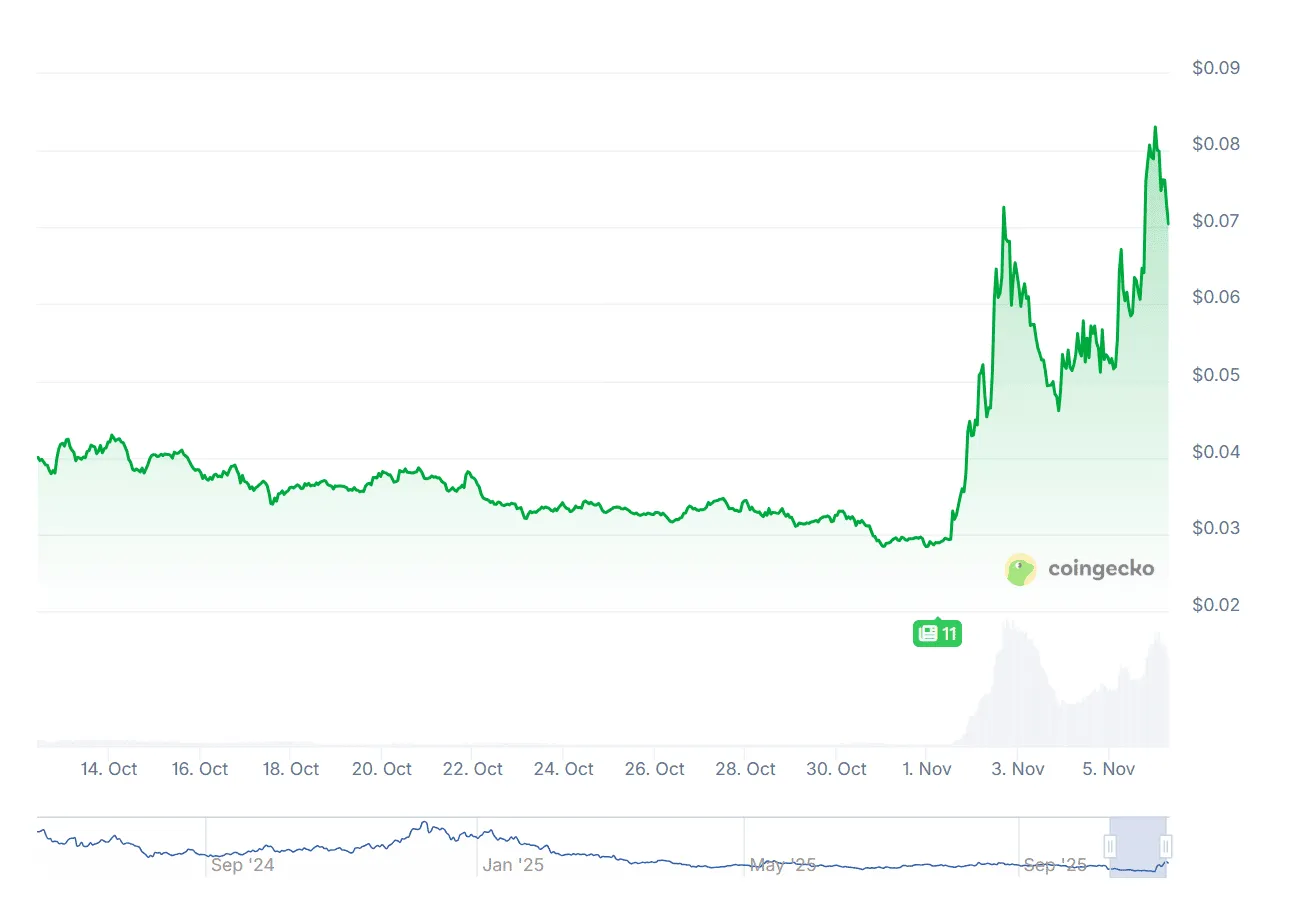
When it’s a bloodbath in crypto, an altcoin ($ZK) is up ~140% on the 7-day chart.
ZK Sync is a rollup stack company like Optimism and Arbitrum. Even though each of them has its own chain, they also sell their tech to other companies to build their own rollup.
For example, Coinbase uses OP Stack to run the Base chain. Robinhood will use Arbitrum tech to run its chain. And so on.
ZK Sync recently made some announcements that put them ahead of others.
#1. ZK Atlas Upgrade
Atlas upgrade is the latest version for ZK Chains, the chains powered by ZK Sync tech. They completed the testnet. The mainnet will be here soon.
But why should you care about the Atlas upgrade?
1.1 High performance
The current generation of L2s isn’t optimized for performance. Even Base’s max TPS is ~3.5k.
With Atlas, ZK Chain can easily process 15k TPS. This is more than enough to meet current blockspace demand in any chain.
For contrast, the maximum realized TPS for Solana across 100 blocks is only ~5.3k tps. Even upcoming high-performance chains like Monad only has 10k tps.
It’ll also be cheap & provide 1-second ZK finality. (Apps on ZK Chains can theoretically provide much faster user experience if they use sequencer preconfs. But that’s a technical topic we don’t have the space for.)
1.2 Interoperability
Right now, different Ethereum L2s feel like different chains. This creates a bad, fragmented user experience.
With Atlas, ZK Chains will be interoperable with Ethereum L1 & all other ZK Chains. This is a big deal
- ZK Chains can now tap into Ethereum’s liquidity directly. No need to build deep liquidity on your chain.
- Users will be able to interact with all ZK Chains as though it’s a single chain. (We’ll need some wallet-level UX improvements tho.)
The image below is enough to understand how different chains will fit together. The interoperability will work at the “gateway layer”.
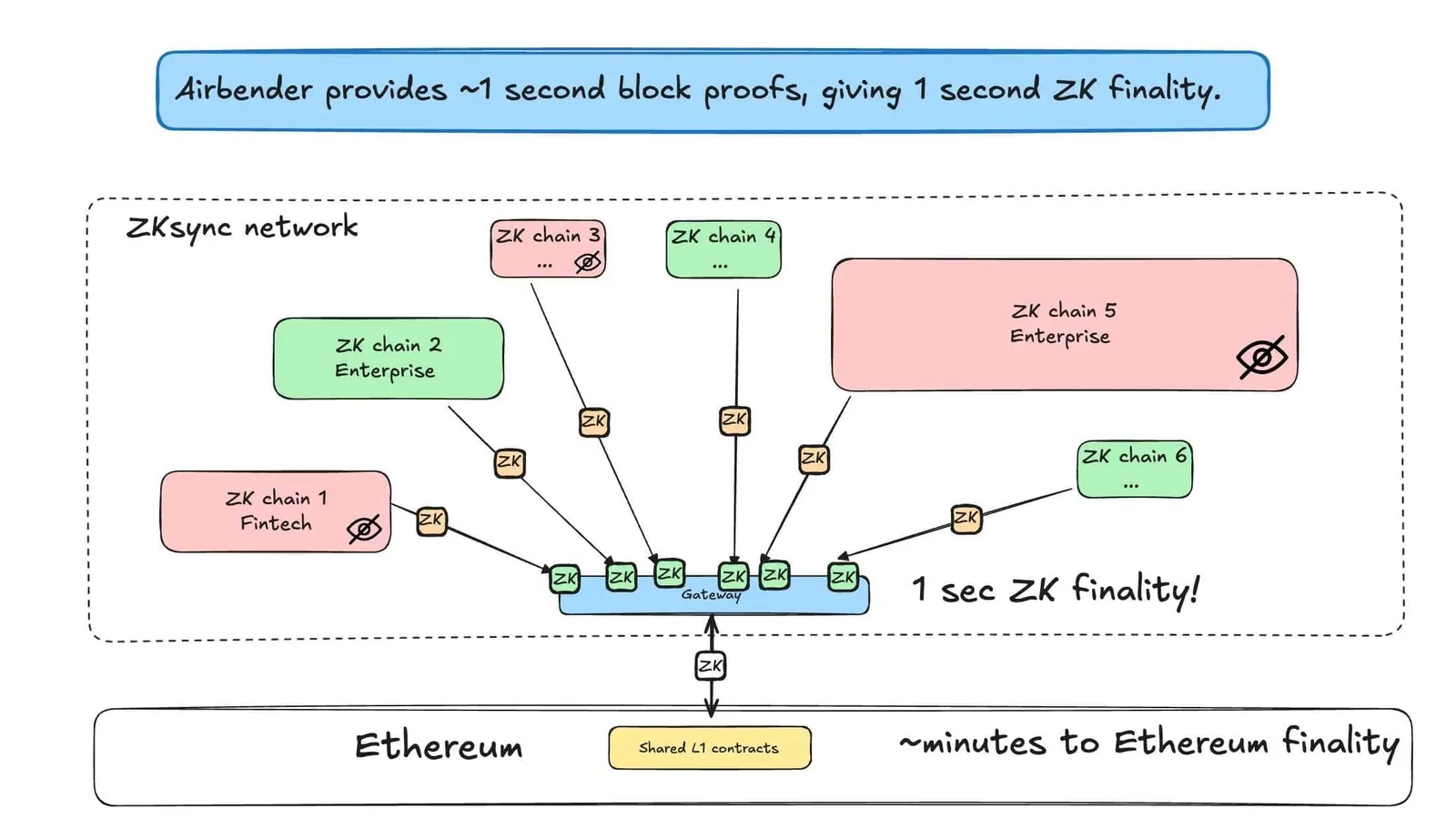
These UX & Liquidity benefits should lead to more successful ZK Chains.
#2. Prividium & Institutions
Banks and other TradFi institutions care about privacy and control. They have sensitive data that can’t be released to the public. So they won’t be able to participate in public chains in full capacity.
Enter Prividium.
- Built in compliance
- L2s built using ZK Stack
- Devs will have customizability & privacy
- Role-based permissioning (e.g., audits, roles)
- State changes are still verified on Ethereum. So everyone can still trust it.
Citi, Deutsche Bank, Mastercard, and 30+ top global institutions are already working with ZK Sync.
#3. New tokenomics = more value accrual
ZK Sync has also proposed new tokenomics for $ZK.
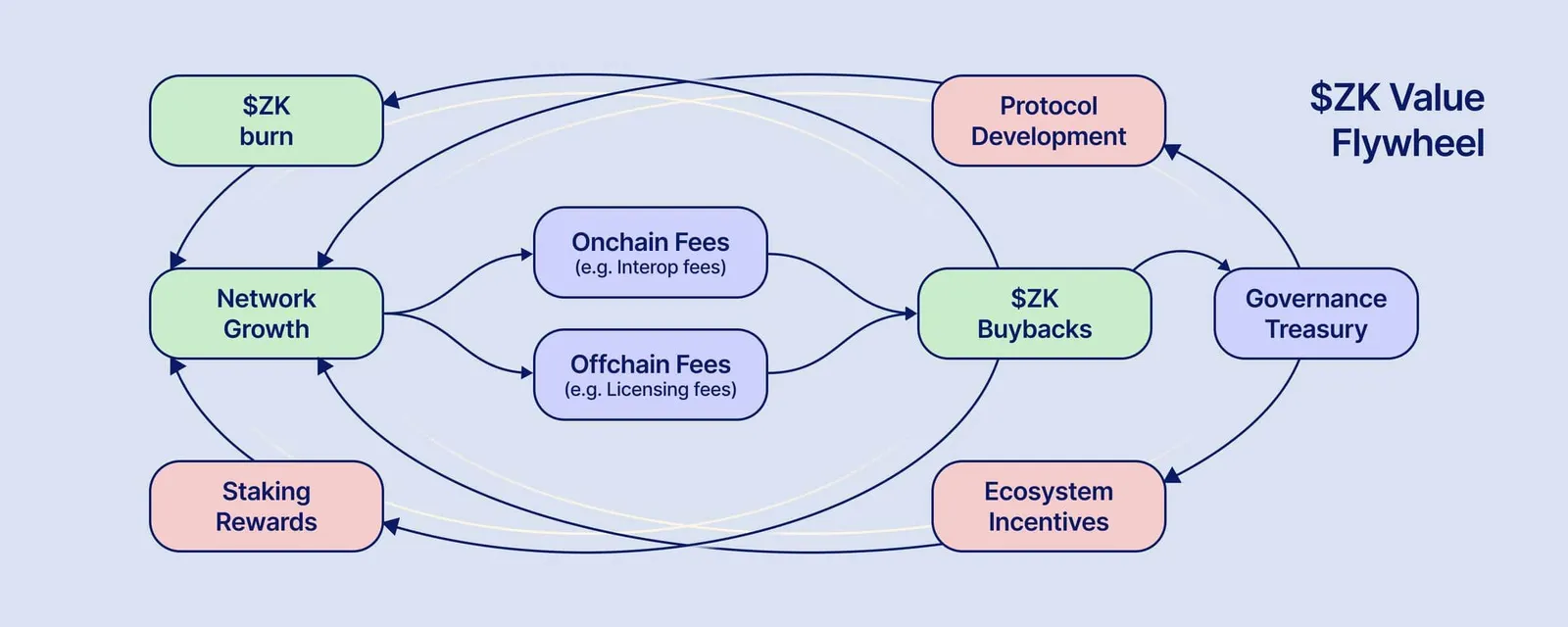
As the ZK Sync ecosystem grows, there are two ways to capture value.
- Onchain interop fees for moving assets and messages across ZKsync and Prividiums.
- Offchain enterprise licensing for advanced modules used by banks and institutions.
These fees will go into a governance-controlled system that buys ZK and then directs it toward staking rewards, token burn, and ecosystem funding.
This new system will accrue value to $ZK. You can read the full proposal here.
These are not live yet. Their launch is something to look forward to.
🚀 DeFi Catalysts
Monad announced that the mainnet will launch on November 24th.
Lido Finance introduced stRATEGY on top of the Mellow Protocol core vaults. You can now deposit assets and receive yield & Mellow points.
Lighter has partnered with Chainlink as our official oracle partner for real-world asset derivatives.
Plume has registered a transfer agent with the SEC. It allows them to bring the trillion-dollar U.S. securities market onchain.
3Jane has integrated Aave. It’ll deposit idle capital into Aave to generate the RFR & implied APR will be a function of the V3 USDC market borrow rate + default risk premium.
📰 Industry News
Google released a new, AI-powered Google Finance chatbot. You can ask questions about the markets and get an expert reply.
Ripple announced a $500M strategic investment led by TradFi giants Fortress and Citadel Securities at $40B valuation.
Moonwell, a Compound Finance v2 fork, was exploited for ~$1M this week. This is their 4th major incident in three years.
🐦⬛ X Hits
- Mert’s privacy thesis.
- Rise of Stablecoin FX.
- Explaining the ZCASH pump.
- State of private liquidity on Ethereum.
- Why can’t crypto build anything long-term?
😂 Meme

Until next time,
Edgy
Today’s email was written by Edgy and Yayya.
DISCLAIMER: I’m NOT a financial advisor. This content is for education and information purposes only. Crypto and DeFi are risky and speculative. Please do your research before investing.
Whenever you’re ready, here’s how we can help you:
- 🚀 The DeFi Edge Ventures – We identify, invest, and help amplify DeFi Protocols that positively impact the Crypto space.
EdgyWrites The DeFi Edge every Thursday
Next issue ·
Get the next issue in your inbox
One short email a week: what happened in DeFi, what it means, and what Edgy is watching next. Free, about 7 minutes, no shilling.
Your inbox, every Thursday


15,000+ readers, including people at
“Very well curated, non chaotic.”
Reader survey