Sponsored By
Degens launched $GAS, a memecoin. It was inspired by Gas Town, an open-source AI orchestration framework. Its creator was Steve Yegge, Ex-Google, ex-Amazon. $GAS had a revenue-sharing mechanism for such creators. So, when it started running, Mr. Yegge collected the $49k cheque from trading fees. This legitimized the token, and influencers shilled it. It soon reached >$60M and Yegge collected over $300k. But when “community” started making demands, Yegge distanced himself from the token. Soon, the token collapsed. Down more than 98%. Everyone got rekt. “Community” accused Yegge of rugging. But Yegge had never made any explicit commitments. I don’t blame either side. I blame memecoins and the “trading-fee-funded” business model. Here’s what we got today:
Today’s email is brought to you by SummerFi — farm high-quality yield automatically. Here’s your Edge 🗡️! Technical strategy MegaETH & The Ethereum Strategy
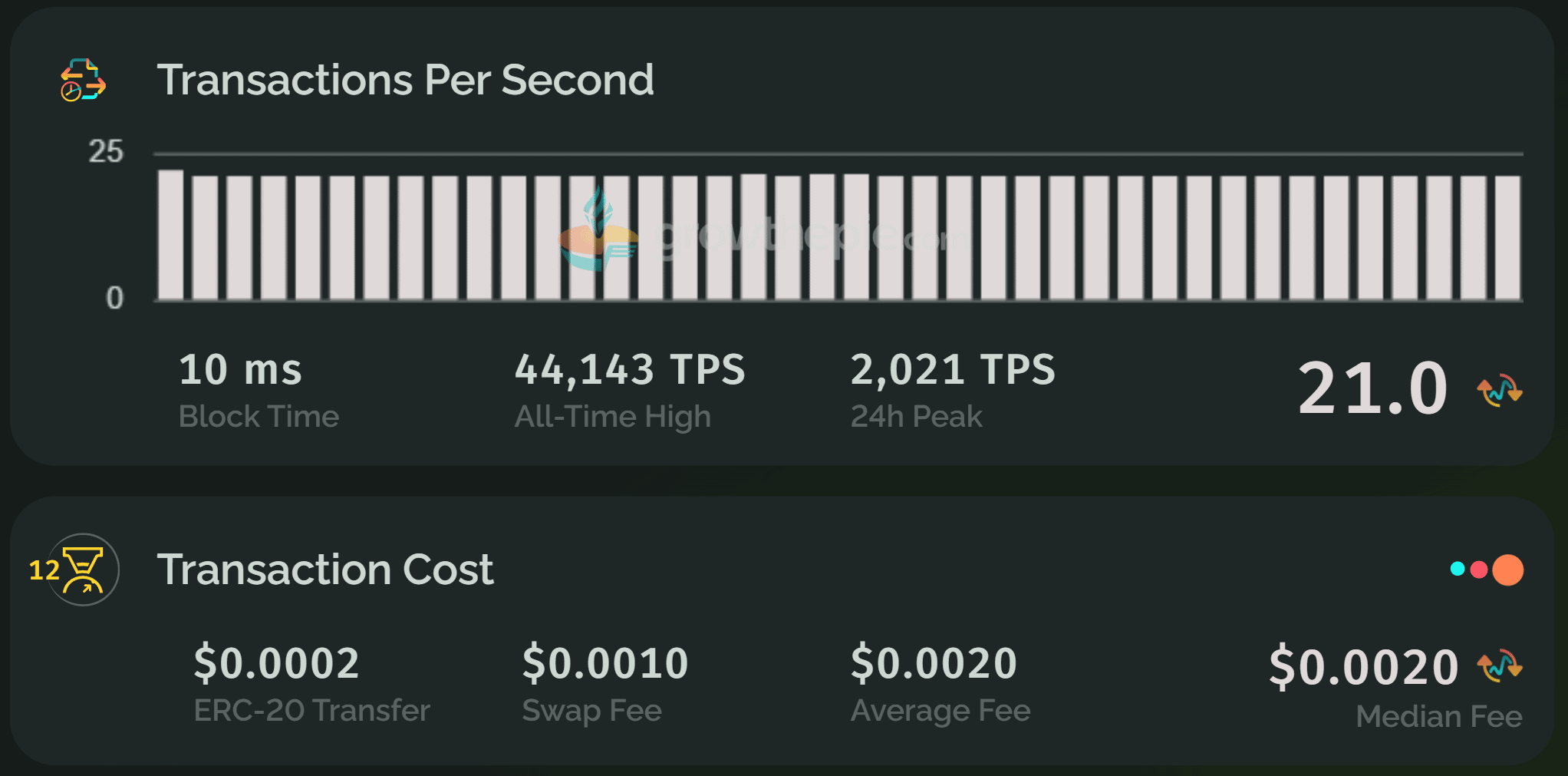
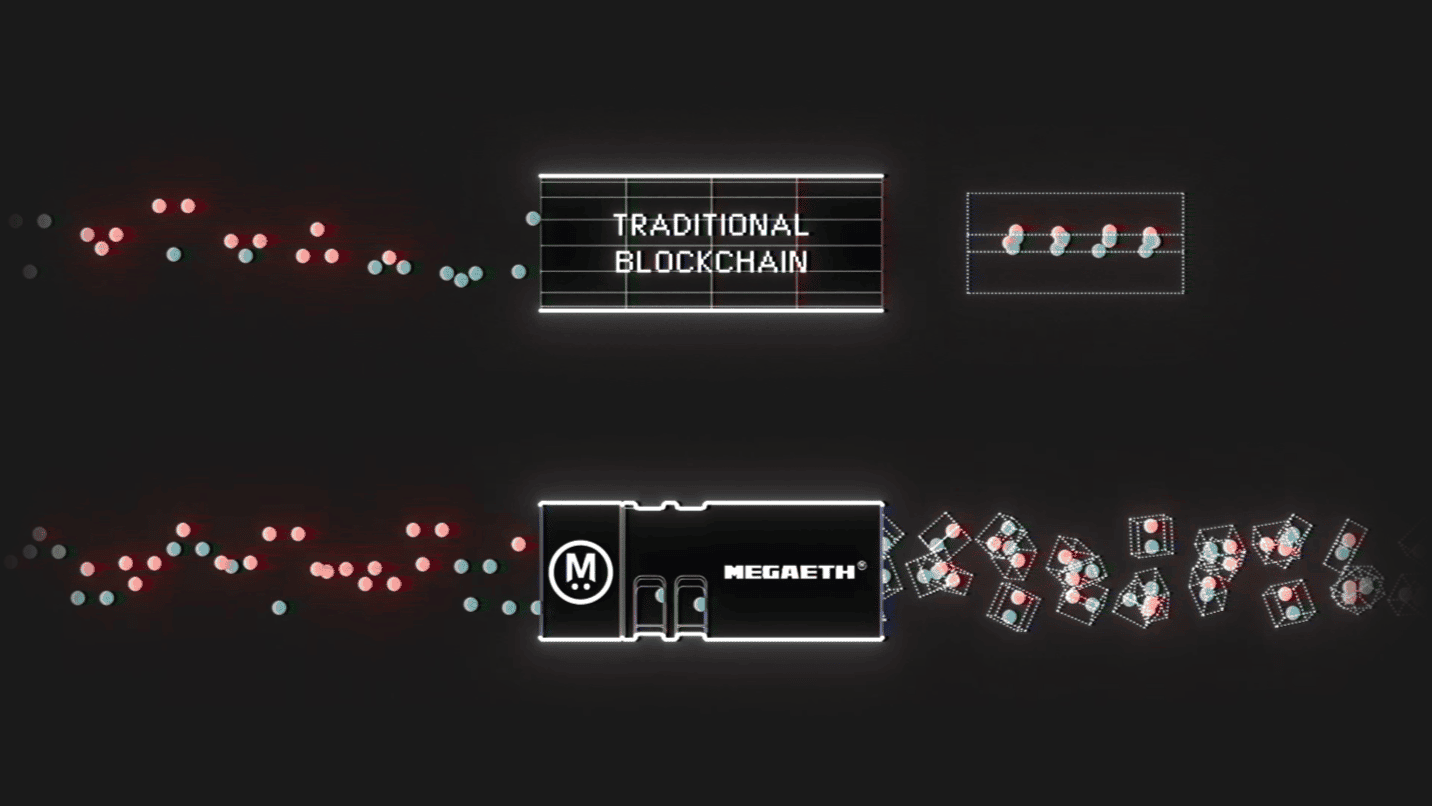
The most performant chain is here. On Jan 22nd, MegaETH will open the mainnet to users for several latency-sensitive apps. The goal is to process 11B transactions in 7 days. That’s as many transactions as BNB Chain processed since its launch in 2017.
It has already done >44k in TPS. The txns won’t even cost a penny. At 10ms blocktime, MegaETH is also 40x faster than Solana. How’s this possible? The Ethereum L2 strategy. Ethereum just focuses on becoming the World-War-III-resistant chain that cannot be taken down by even nation-states. L2s can completely outsource the security to the L1 and then focus on pure performance. So, while Solana has to balance consensus alongside performance, MegaETH is purely focused on performance. Solana has to set a limit on the computational power to remain decentralized. MegaETH doesn’t have to worry about it. They can just push the computational power to maximum. This is the difference between Ethereum’s modular strategy and Solana’s monolithic strategy. Both approaches have their pros and cons. Today, I want to go through the pros and cons of Ethereum’s strategy. Benefits
Drawbacks
The effectiveness of the strategy is still debatable. Personally, I think it’s working in the long-term. Performant L2s like MegaETH will compete against Solana to attract apps that require performance. L1 will focus on attracting institutions that require WW-III security. Vitalik has been on a tweeting spree lately. He is doubling down on the decentralization maximization approach for the L1. So Ethereum is doubling down on its L2 strategy. Sponsored by SummerFi SummerFi: Automated Yield Farming for Everyone
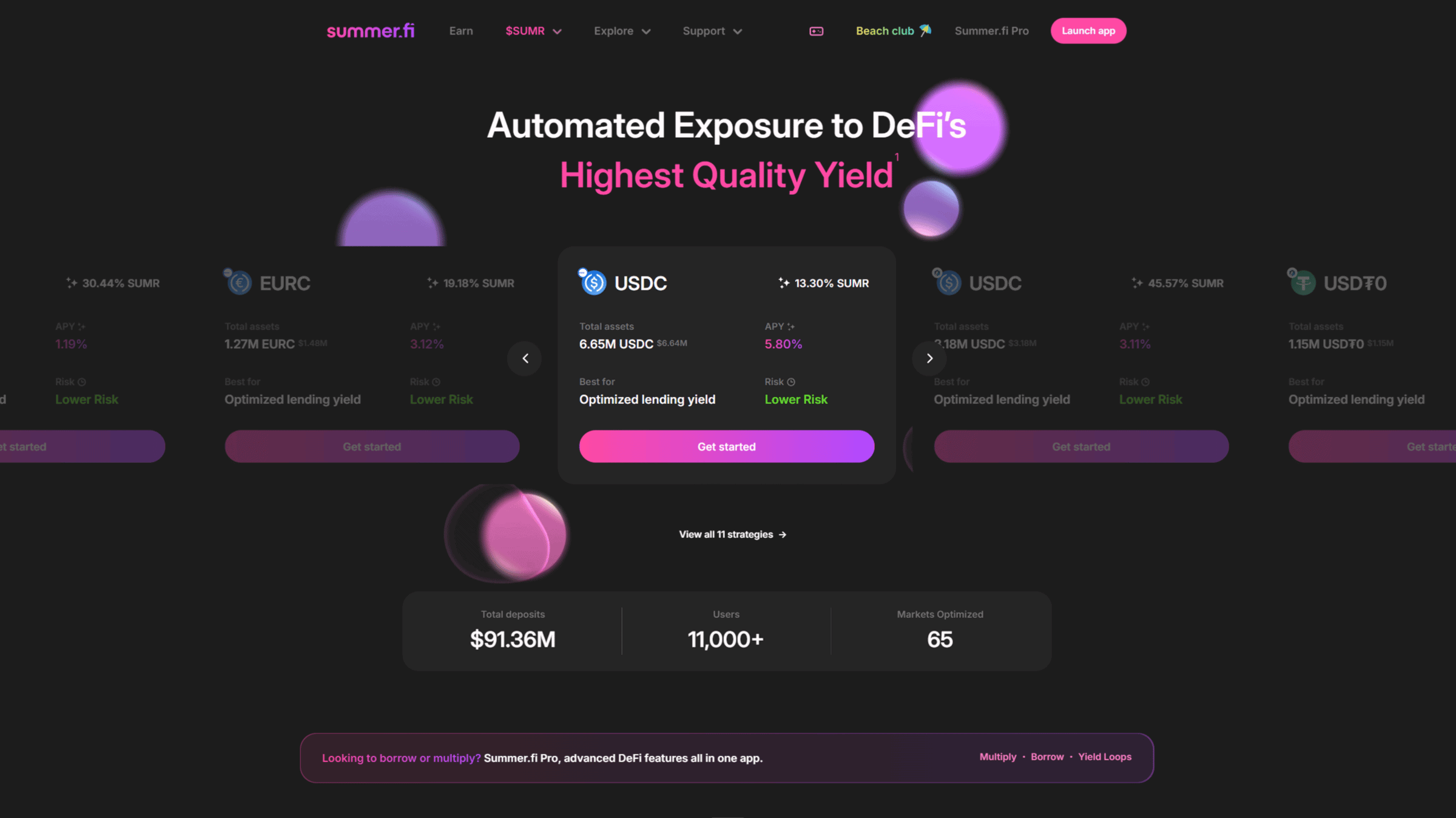
Markets are choppy. So, DeFi natives are farming yield. But Yield Farming is almost a full-time job. Tracking best rates, calculating risk-reward, switching between protocols, approving countless transactions, paying high gas fees, and more. Is there a better way? Enter Summer.fi Just deposit $ETH or stablecoins, it’ll automatically farm for you:
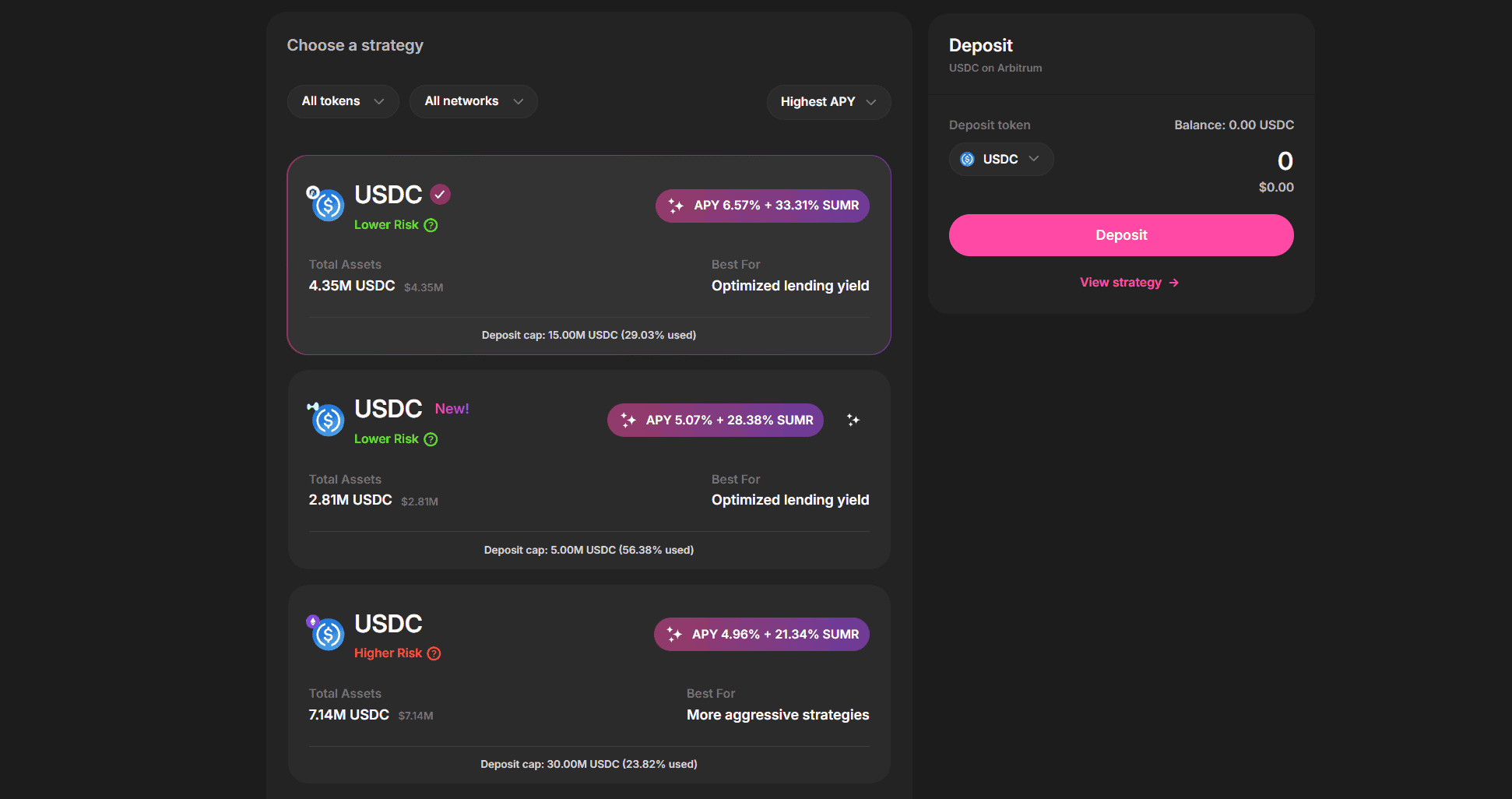
The APY on these vaults is also good. While the median DeFi yield is only 0.73%, a low-risk USDC vault on HyperLiquid is giving >5% APY. The vault will earn points from other protocols: Hyperlend, Hyperbeat, and Felix. So you could get even more rewards. Additionally, the vault is also giving 29.67% APY in SUMR tokens. The token isn’t live yet. The ~30% APY assumes $250M FDV. It’ll go live tomorrow, on January 21st, via Aerodrome Ignition. Btw, SummerFi has vaults for major assets (ETH, USDC, & USDT) across multiple chains: Ethereum, Base, Arbitrum, & HyperLiquid.
SummerFi is a proven product that has been live for a year. You can see its growth metrics here. The team is even older, dating back to 2016 under MakerDAO.
Strategy Best R:R Stablecoin Strategy in the Market
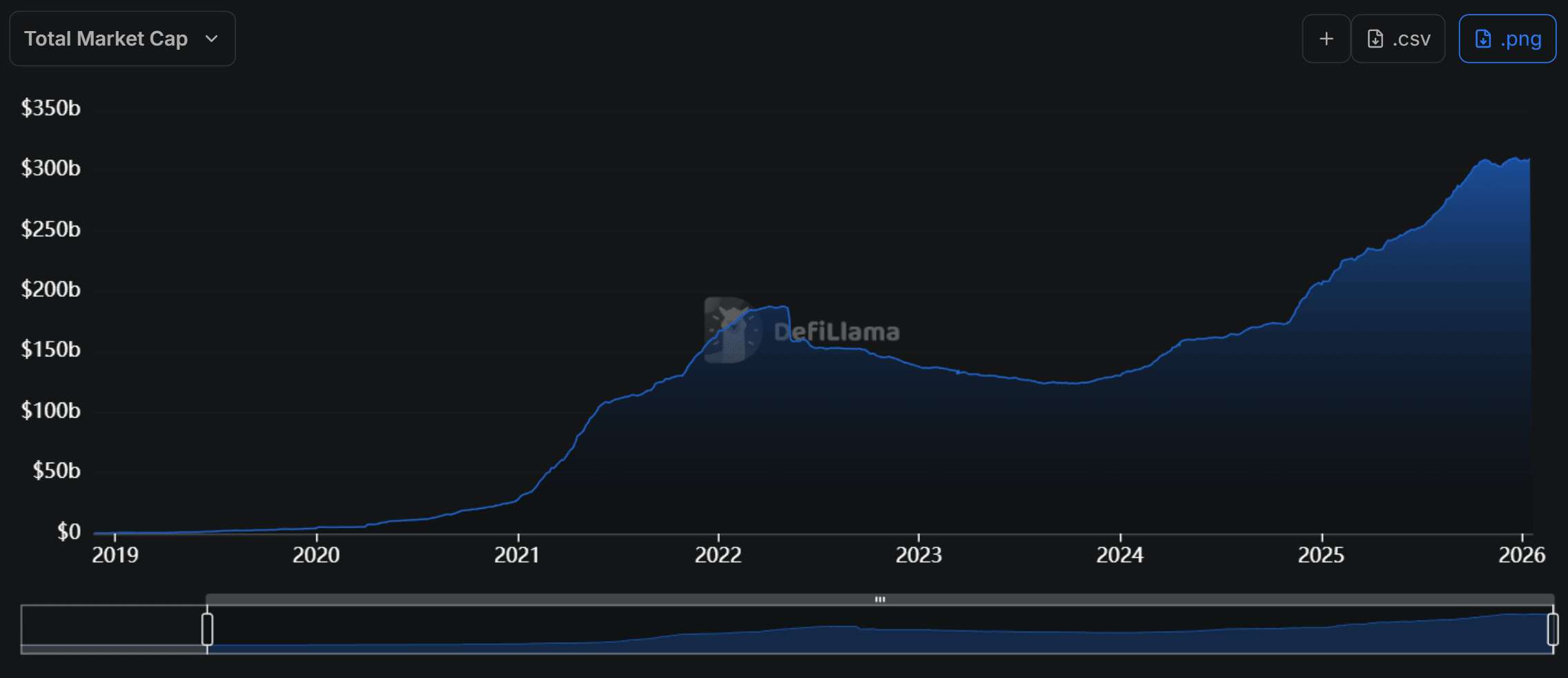
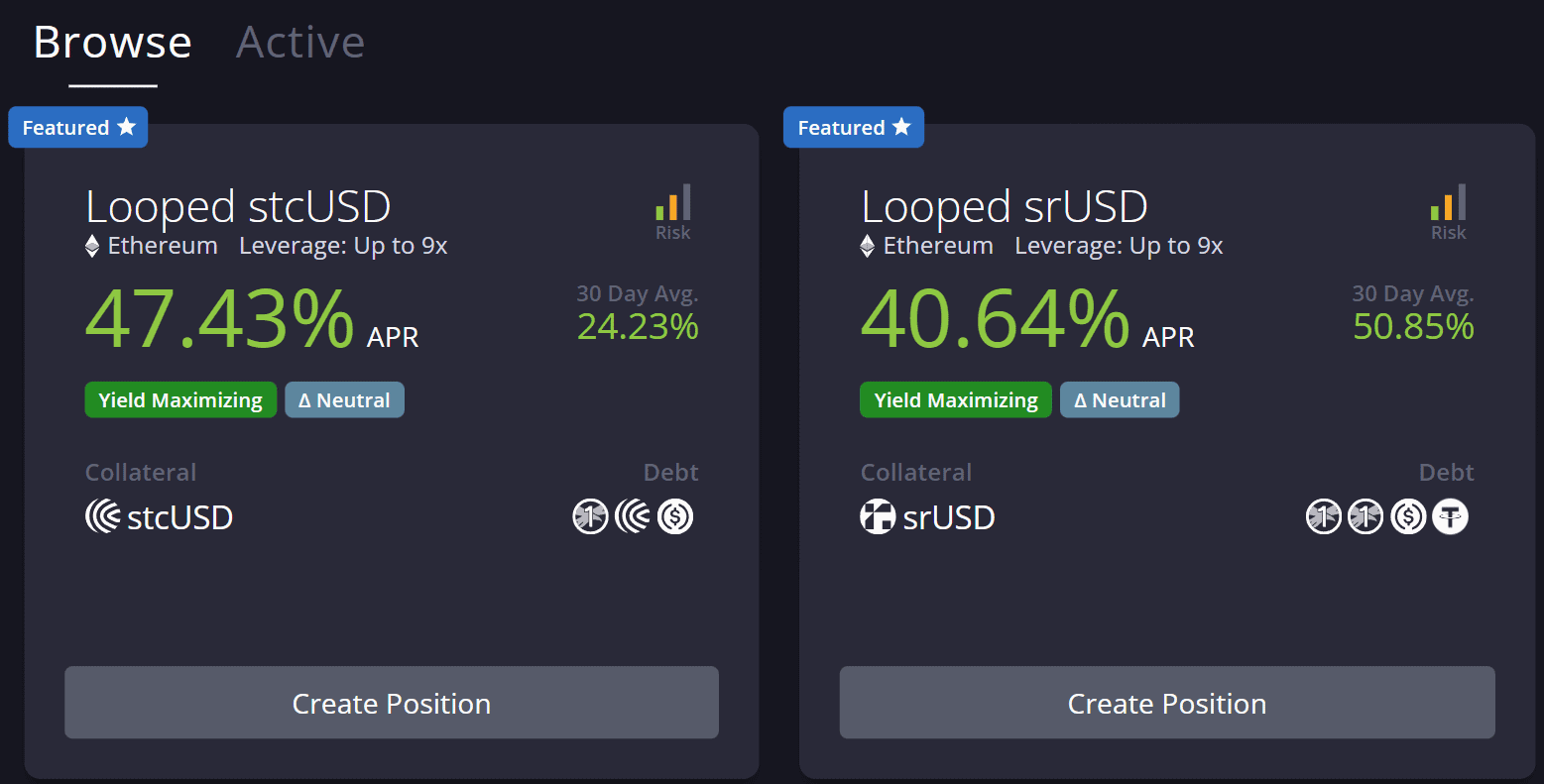
Stablecoin just hit a new all-time high of $311B. Since mid-2023, it has only growing. As more stables enter crypto and chase after the same yield, the returns should decrease. Simple strategies aren’t effective anymore. The yield on a USDC deposit in Aave is less than the risk-free rate from the Fed. So if you want high yields, you need DeFi strategies like looping to earn yield. Ideally, they should be automated strategies so that you won’t have to manually manage the risk. Right now, there’s one that’s clearly paying the highest risk-adjusted yield right now: Dolomite. Right now, you can get >47% APR on stablecoins via Dolomite.
These strategies are offering >47% on stcUSD from Cap Money & >40% srUSD from Reservoir. “50% on stables, that’s too much, what’s the catch?” Good catch. You should always know where the yield’s coming from. In this case, it’s coming from incentives. This week, World Liberty Finance announced a partnership with Dolomite. They immediately supplied $10M in USD1 liquidity to the lending market. On top of that, USD1 suppliers get an additional off almost $4k of WLFI per day. The $10m they have supplied remains parked and does not earn incentives. There’s now over 30 million USD1 supplied. USD1 supply up → USD1 borrow rates down → profitable looping. Here’s the underlying strategy:
Dolomite makes this easy with one-click looping. Usually, the gap between supply and borrowing rates closes quickly, and looping is less profitable. But World Liberty has supplied $10m indefinitely, which should keep USD1 utilization and borrow rates low and the loop profitable for the future. I always preach about second-order thinking in DeFi. That’s the perfect example. You’re not just tracking where the yield comes from. You also have to understand WHY it exists and WHAT could change it. This is how you keep stablecoins productive when markets go sideways. 🚀 DeFi Catalysts Pendle is changing the vePENDLE model to sPENDLE, a liquid staking token that removes multi-year locks in favor of a 14-day withdrawal period. Pump.fun introduced the $3M Build in Public Hackathon. Pump Fund will advance the startup ecosystem on Pump.fun. Hinkal introduced Hinkal Private Send. It enables private sends from any public wallet without exposing any private details onchain. Trove, a perp DEX for collectibles like Pokémon cards, pivoted to Solana after raising from the Hyperliquid community. People are accusing it of being a rug. Solana has added onchain market for $ZORA from the Zora protocol. This is in line with their vision of becoming the market for all assets. Cap Money is doing a token sale using Uniswap’s Continuous Clearing Auction (CCA). The maximum FDV is $250M. Hyperlend introduced its native token, HPL. Hyperlend is the credit protocol built for the Hyperliquid ecosystem. Yield Basis proposes a Hybrid Vault. It aims to enable users to enter the YB pool based on a personal cap, determined by their contribution to crvUSD peg stability. Trojen, a trading terminal, has gone live on Solana. Now, they’re running promotional campaigns with >$5M in SOL rewards for early users. World Liberty Financial launched World Liberty Markets alongside Dolomite. It’ll let users supply assets to earn yield or borrow against their portfolio. Fogo has introduced the tokenomics details of $FOGO. It has “Fogo Tokenomics” with a revenue-sharing model. Euler founder Michael Bentley is stepping back from the day-to-day CEO role and transitioning into an advisory role. 📰 Industry News NYSE is seeking SEC approval for a new blockchain-based platform that will allow 24/7 trading of tokenized stocks and ETFs. Bermuda Govt is partnering with Coinbase and Circle to build a fully onchain economy. They’ll pilot with stablecoin payments across government agencies. Pudgy Penguins is collaborating with Manchester City, who won 6 of the last 8 Premier League titles, on a premium collectible and merchandise release. 🐦⬛ X Hits
😂 Meme
Edgy Today’s email was written by Edgy and Yayya.
|
Become a Smarter DeFi investor in just 7 minutes per week
The DeFi Edge shares the best DeFi strategies, insights, & analysis so you can be early to the next opportunities.
By Edgy - January 20, 2026