Kaito and Cookie depended on the X API to calculate mindshare. X revoked access to all such InfoFi projects. Game over.
Both Kaito and Cookie shut down their Yaps & Snaps programs.
Nikita, the X Product Head, cited AI slop from InfoFi-incentivized accounts as the reason. Which… yeah, is very much true.
Personally, I was never a big fan of AI slops from InfoFi.
Still, this kill switch showed us why we need decentralization. A single company shouldn’t have the power to kill an ecosystem.
Here’s what we got today:
Recap of the week. Clarity Act and sentiment shifts.
2026 Sector Outlooks. RWA, Lending, and Consumer crypto.
Around the world.
Today’s email is brought to you by Katana — the specialized chain for DeFi.
Here’s your Edge 🗡️!
Markets
Price Swings: What’s Happening?
This week, the market was moving from one end to the other.
$BTC started the week around $90k, peaked at $97k on January 15th. Right now, it’s sitting at $95k. What’s happening in the market?
Well.. It’s difficult to pin down the exact reasons. But the top story of the week mirrored $BTC price action.
#1 The Clarity Act Drama
The Clarity Act is a bill introduced in 2025 to bring regulatory clarity to crypto.
It’s in the Senate. And the Senate Banking Committee’s vote on the bill was supposed to happen yesterday. So there was a lot of optimism.
Many people, like Bitwise CIO Matt Hougan, pointed out that it was a bullish catalyst. So it must’ve contributed to the bullish sentiment at the start of the week.
But the draft from the Senate committee completely shifts the mood. Some provisions were problematic for crypto users:
Tokenized securities would have several restrictions.
The bill banned stablecoins from giving yield/rewards to users. This is a clear move to protect TradFi banks.
DeFi applications will have restrictions as well. Most are worried about surveillance provisions invading privacy.
According to Brian Armstrong, it made CFTC subservient to the SEC. CFTC regulates commodities while the SEC regulates securities.
Due to these concerns, the committee’s vote was postponed. Many amendments have already been filed.
I’m not a lawyer or an expert on securities laws. So I can’t opine about the bill. But many crypto lawyers said this bill was notably worse than the House version.
Coinbase publicly came out against the Bill on January 15th, the same day that $BTC peaked. So we can assume that bearish sentiment on the bill affected the mark as well.
To be fair, the bill had its supporters as well. Kraken, Circle, Ripple, a16z, and Coin Center were in favor.
At the end of the day, it’s controversial.
Some believe this is the legitimate way to integrate crypto into TradFi. Others believe this bill is designed to protect big institutions and stifle decentralized protocols.
Personally, I think this version of the bill favors big boys a bit too much.
But the Clarity Act wasn’t the only factor in price action.
#2 Leverage dynamics
Crypto price is heavily influenced by leverage. This week wasn’t different.
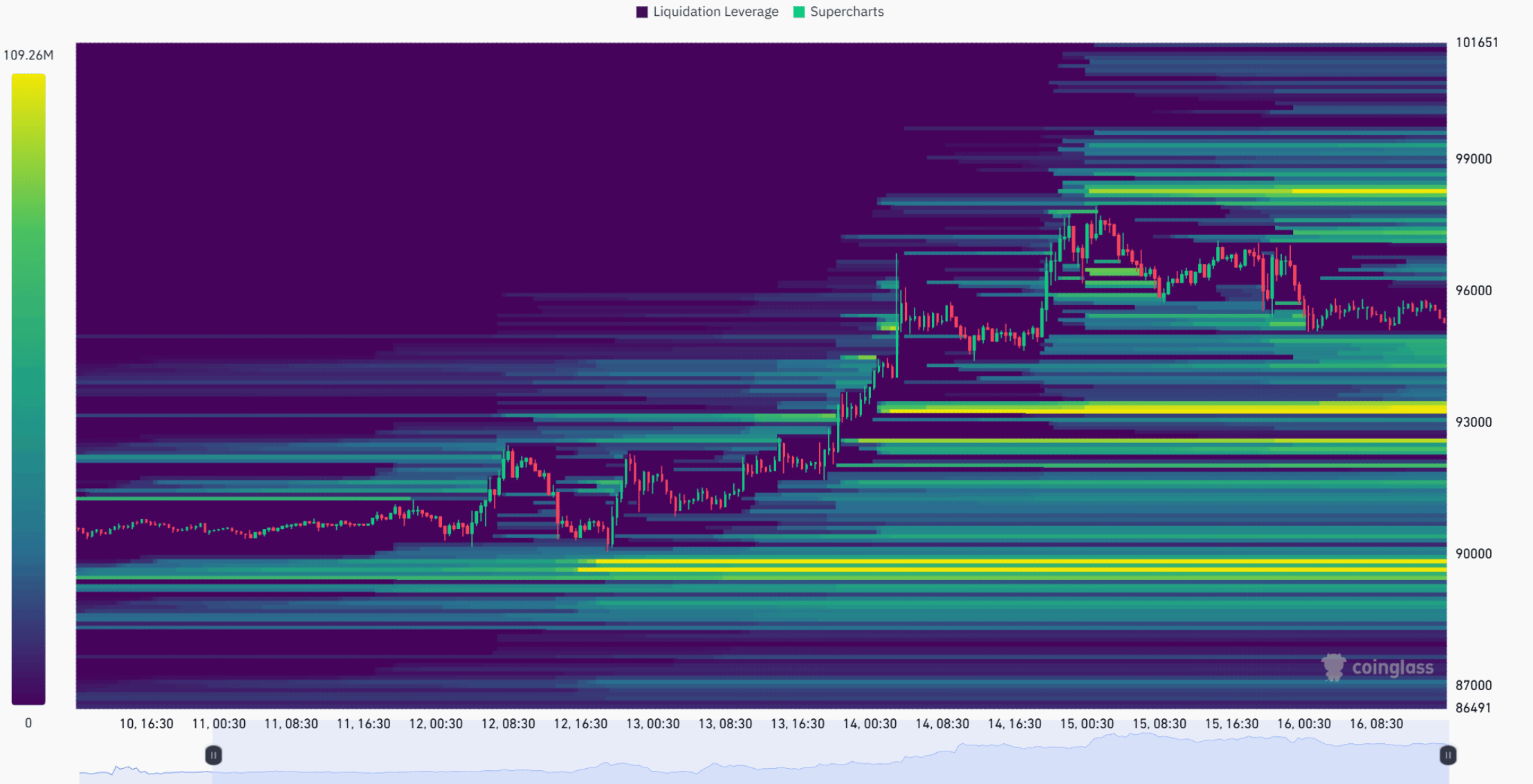
Source: Coinglass
If you look at the BTC liquidation heatmap on Binance above, we can see bright bands around the price after the move. It shows that short sellers were forced by BTC.
These price movements were amplified by liquidations as well. In the longer term, most analysts are still bullish for 2026.
The Bill is still expected to pass in 2026. Overall, it’ll be bullish for the industry.
Right now I’m feeling cautious. But in the long term, I’m optimistic.
But there’s only one DeFi-optimized chain at the architectural level: Katana. Even at an architectural level, it’s designed to create deeper liquidity and higher yields.
Deep liquidity is created by incentivizing liquidity to a core set of apps: Morpho for lending and Sushi for DEX.
Chain-owned liquidity of core assets brings the best pricing and liquidity. Katana sequencer fees fund them.
Vault Bridge deploys the assets on the L2 bridge contract into low-risk strategies on Ethereum L1. This yield is distributed to the Katana ecosystem.
Together, these mechanisms create a sustainable flywheel where activity and yield will reinforce each other. So it’s the best chain for DeFi.
But that’s not enough. In most chains, it’s hard to find good farms and assets.
Not in Katana.
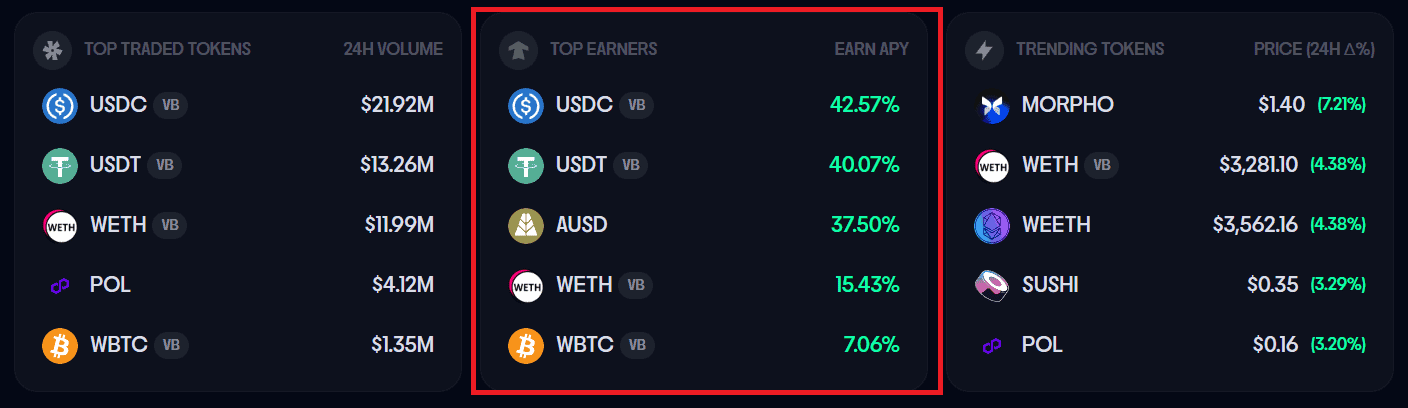
Katana app screenshot
Katana App is designed to be your single DeFi command center.
Monitor your portfolio
Find top tokens and farms
More features like staking and quests will come soon as well.
Most lucrative farms are on Katana. Hurry up to start earning.
We’re 3 weeks into 2026, and things are already crazy.
Trump became the president of Venezuela, and Iranians are marching against theocracy. On the crypto side, BTC has pumped to $95k, and the Clarity Act is in the spotlight.
On the last day of 2025, we published an outlook for 2026 in TDE Pro.
We covered five major themes. One of them included tokenized equity, a point of debate in the Clarity Act drama.
Additionally, we covered the current state and outlook for 8 different sectors/narratives. I’m gonna give you a small bite of the full piece.
#1. RWA tokenization
This sector tokenizes real-world assets like equities and gold. It already has huge traction. As of Nov 2025, tokenized RWAs are sitting at ~$35B, a whopping 6x jump year-over-year.
Here are some important trends:
The efficiency gap is huge. TradFi settlement is still slow, manual, and middleman-heavy. McKinsey estimates post-trade processing costs ~$17 – $24B per year across the industry.
Crypto is much more efficient for settlement. According to McKinsey, crypto companies can capture 20-40% of that value.
Regulatory clarity is coming. The Genius Act was great for stablecoin. The Clarity Act is being discussed. Institutions don’t need perfect clarity; they only need enough clarity to avoid jail time.
RWAs won’t just be “tokenized spot.” They’ll be traded like crypto. For example, we’ll see perpification of RWAs. Crypto audience will probably find this more exciting than just holding spot.
The “winning” RWA projects will be the ones that can scale distribution and survive regulatory scrutiny.
#2. Yield, Lending, and Credit
A major inflection point for DeFi lending will be the expansion of un/undercollateralized borrowing.
Several protocols are already experimenting with alternative models: institutional borrower pools (Wildcat) and native credit scoring systems (3Jane) are good examples. Advances in zero-knowledge proofs can change the game here. It can enable credentials-based borrowing.
The boundary between TradFi and DeFi will continue to blur. Rather than through overcollateralization, credit risk will be priced and managed through curators, underwriting middleware, and credentials-based systems enabled by zero-knowledge proofs or similar mechanisms.
Value will migrate toward core infrastructure, managed products, and underwriters who control capital allocation. It’ll shift crypto lending toward more structured and traditional credit products built on blockchain rails.
#3. Consumer Crypto
The infrastructure is ready for mainstream crypto consumer apps.
Mainstream users won’t need to understand gas fees or seed phrases. They’ll simply tap to pay, stake, monetize content, or speculate on apps powered by “real-time blockchains” (10-millisecond chains like MegaETH).
Here’s what it might look like
Superapps will integrate multiple protocols under one identity, balance, and feed. Base App from Coinbase is a good candidate.
Mobile DeFi apps will look to attract more users. Aave, the biggest DeFi app by TVL, has already launched its mobile app. Jupiter is another notable example.
Neobanks blend crypto with Venmo-like UX. With features like idle cash earning 5-10% APY and tokenized remittances that settle in seconds, they have big potential.
SocialFi v3 still has potential. It’ll probably focus on seamless monetization: less gatekeeping, more embedded yields (e.g., staking posts for ad revenue shares).
Polymarket has already shown us the way. In 2026, more projects will walk it.
This was just a few insights from the full report, which is a 5.6k words monster. You can read the full report on TDE Pro.
🚀 DeFi Catalysts
Kaito is shutting down the Yaps and incentivized leaderboards system. They’ve now introduced Kaito Studio.
Lighter launched $LIT staking and its own Mobile Application on both Android and iOS. LIT staking will unlock financial products like LLP.
PumpFun introduced a new feature: callouts. It’ll allow users to “call” out specific tokens and alert all of their followers.
Noise, the mindshare trading platform incubated by MegaETH accelerator, is launching on the Base chain.
StarkNet token, $STRK, is now available on Solana via Near Protocol intents. This is aligned with Solana’s vision of internet capital markets.
Solana Mobile has released the SKR Allocation Checker. ~2B $SKR will be distributed to users and developers across the Solana Mobile ecosystem.
Fluent is an L2 offering blended execution, which allows EVM & SVM apps to compose with each other. They’re conducting a reputation-based sale.
Polymarket has partnered with Delphi Digital to turn Delphi’s 2026 predictions into live, tradable markets.
Morpho is shutting down its Discord. Soon it’ll transition to read-only. This indicates that priorities of big protocols might be changing.
Backpack started the invite-only private beta for The Unified Prediction Portfolio. It allows capital to be used across all of Backpack.
Ethena and Safe partnered to accelerate USDe adoption on multisig wallets with incentives like gas-free transactions on the Ethereum mainnet.
MilkyWay, the protocol that started out as a $TIA LST protocol, has announced its shutdown. Read the article for their wind-down plan.
MetaMask has added support for the Tron Network. This is great for Tron to access a large base of new users.
BitMine, the ETH Treasury Strategy company, announced a strategic investment in Beast Industries, MrBeast’s company.
X has announced that they’ve revoked API access for InfoFi projects that incentivize posting on X. Kaito & Cookie has shut down its InfoFi programs.
DISCLAIMER: I’m NOT a financial advisor. This content is for education and information purposes only. Crypto and DeFi are risky and speculative. Please do your research before investing.
Be Early to the Next Opportunities
TDE Pro gives you direct access to our research, our portfolios, and the gems we’re betting on. It’s your unfair advantage to move before the crowds.
Whenever you’re ready, here’s how we can help you:
⚙️ The DeFi Edge PRO– Designed for busy people who want to stay ahead of the curve. Leverage our research to save you hours each week, and to see what we’re personally investing in. Join today.
🚀 The DeFi Edge Ventures– We identify, invest, and help amplify DeFi Protocols that positively impact the Crypto space.
You’re receiving this email because you signed up for my newsletter. You can update your Preferences or Unsubscribe here. 600 1st Ave, Ste 330 PMB 92768, Seattle, WA 98104-2246