Updates
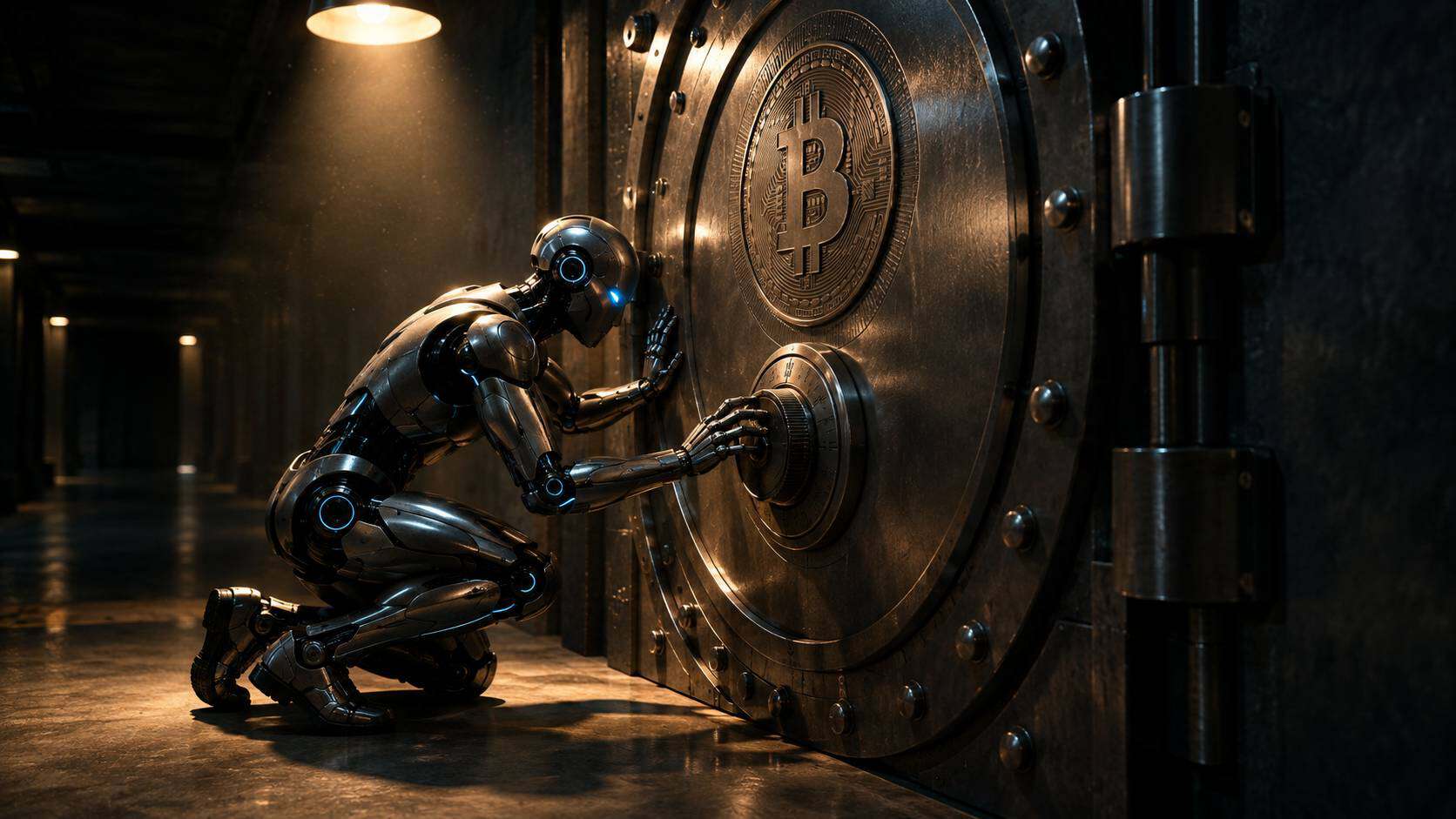
Should We Move Crypto to Bunkers?
Justin Drake, one of Ethereum’s most respected researchers, rang a massive alarm: AI might break the mathematical assumptions securing your coins.
Not in years. Possibly in months. (That’s a rhetorical exaggeration imo.)
The post did 4M+ views. What the hell is happening? Should we stop everything?
What Drake actually said
What happened? On October 7, after OpenAI released 722 manuscripts claiming solutions on hundreds of open problems across mathematics and theoretical computer science, Justin Drake posted a call to “calmly begin planning for bunker mode.”
Quick 80/20:
- The fear: ECDSA, the signature scheme that secures Bitcoin and Ethereum wallets, could break before quantum computers arrive. His worst case is “months not years.”
- What “break” means: recovering a private key in about a week on a large GPU cluster.
- Why now: AI models can knock down math assumptions that stood for decades. In his words, “mathematical superintelligence is upon us.”
- The ask: move funds to fresh addresses that have never sent a transaction. Big holders first. “Don’t rush. Don’t panic.”
He also threw in a silver lining for smaller holders. Satoshi’s ~20K exposed addresses hold 50 BTC each, so an attacker will go after those first. Drake calls it “Satoshi’s shield.” (Protection via poverty. Finally.)
But to understand why a fresh address helps, you need to know what’s actually at risk.
Why AI became scarier than quantum here
Quick 80/20 on how your wallet works:
Your private key creates a public key. Your address is a hash of that public key.
Going from public key back to private key is the “impossible” math problem that elliptic curves rely on. Going from a hash back to a public key is a different, separate problem.
On Bitcoin, your public key stays hidden behind the hash until you send a transaction. Then it’s on-chain forever. (On Ethereum, any account that has ever sent a transaction has its public key exposed too.)
That’s the whole idea behind bunker mode. If the math breaks, attackers need your public key to work backwards to your private key. A fresh address that’s never sent anything only shows the hash. Nothing to attack.
Why does AI change the timeline? Quantum is a hardware race. You can (sorta) watch it coming.
But Math breakthroughs are happening rapidly. AI just knocked down assumptions that stood for decades, like the 3SUM conjecture and the n log(n) bound for integer multiplication. And Shor’s algorithm already breaks curves on a quantum computer.
According to Drake, Elliptic curves used by crypto and other security systems are a juicy target. They carry lots of mathematical structure, and structure is what clever attacks exploit.
He also suspects labs or governments aren’t publishing crypto-breaking results due to security concerns. No way for me to check that.
The cryptographers aren’t buying it
That’s the scary version. Here’s why most experts pushed back.
1. Solving hard theorems doesn’t make hard problems easy.
Yehuda Lindell, one of the best-known names in applied cryptography, called it “the very definition of FUD.” His point: AI proving tough theorems says nothing about whether problems we believe are inherently hard actually are. Different thing entirely.
2. If the curves break, everything will go to zero anyway.
Drake’s ex-colleague at EF Dankrad Feist:
“If elliptic curves are broken so that any exposed public key leads to compromise… your coins are going to zero. Having them in bunker mode is not going to help you.”
Your BTC sitting safely in a fresh address doesn’t help much when millions of exposed coins are getting drained and dumped on the same market. The same break lets attackers fake bank websites and sign malicious software updates as well. Your tiny wallet would be the least of the world’s problems.
My take: the prediction is a bit of FUD. There’s a non-zero probability that a hack could happen, but that’s too low for his “bunker mode” suggestion, especially for retail investors.
But the precaution is still cheap. I’ve written about crypto opsec multiple times. I’ll update it next week if you guys want. Lemme know by replying.
Catalysts
Token Unlocks Aren’t Automatically Bearish
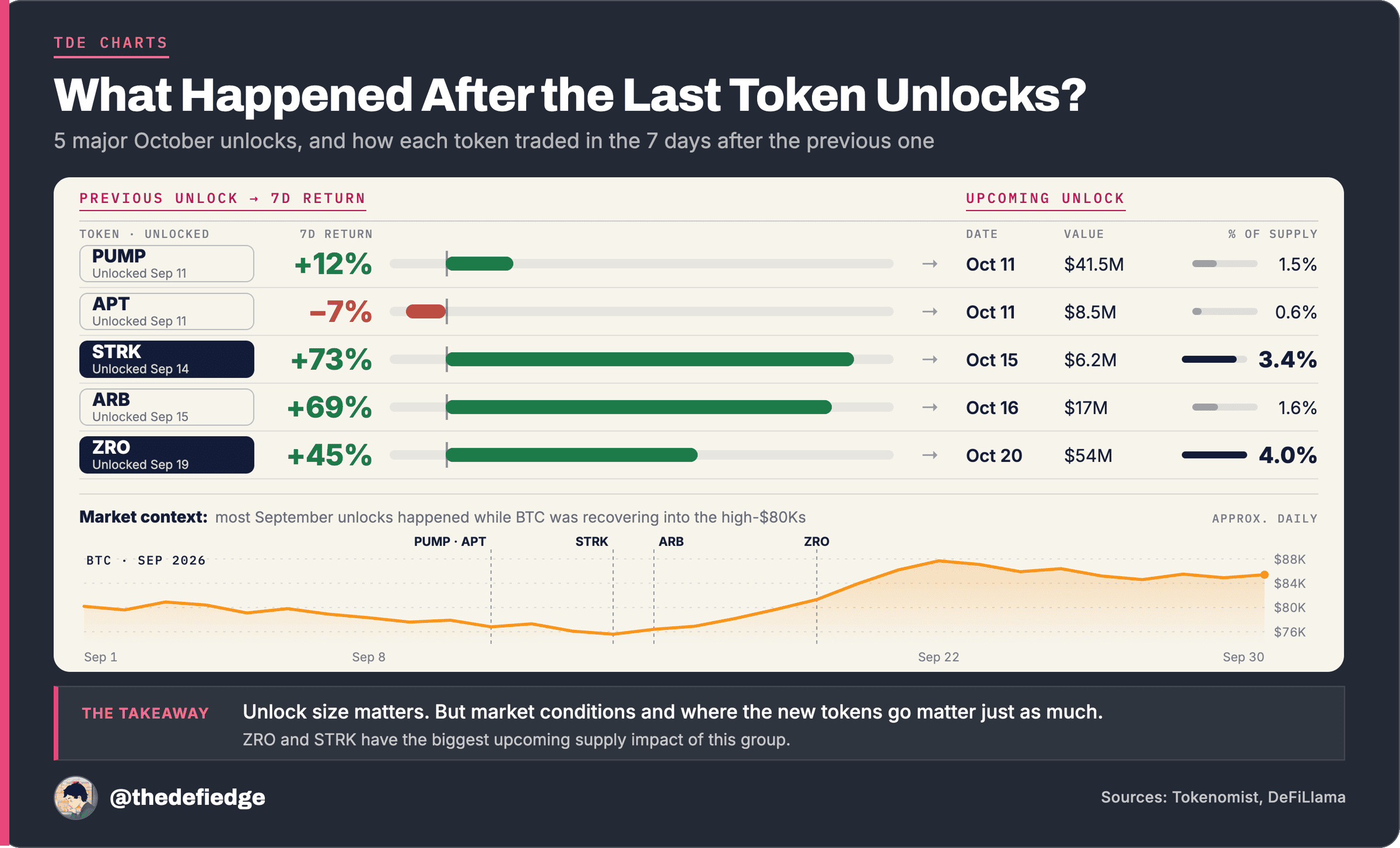
$STRK unlocked new supply on Sep 14.
Then it went up 73% in a week.
October has $1.3B worth tokens unlocking, so I went back and checked what happened last time.
Here are the ones I’d keep an eye on:
- $PUMP (Oct 11): ~$41.5M unlocking, around 1.5% of supply. Up roughly 12% over the 7 days after its previous unlock on Sep 11.
- $APT (Oct 11): ~$8.5M unlocking, around 0.6% of supply. After its previous unlock on Sep 11, APT fell roughly 7% over the next 7 days.
- $STRK (Oct 15): ~$6.2M unlocking, around 3.4% of supply. The funny part? STRK gained roughly 73% in the 7 days after its Sep 14 unlock.
- $ARB (Oct 16): ~$17M unlocking, around 1.6% of supply. ARB was up roughly 69% in the week after its Sep 15 unlock.
- $ZRO (Oct 20): ~$54M unlocking, around 4% of supply. Its Sep 19 unlock was followed by roughly a 45% gain over the next 7 days.
The obvious mistake here would be looking at those September returns and assuming the same thing happens again.
A lot of that was the market. $BTC went from ~$63k in mid-August to the high $80s by Mid-September, sentiment flipped bullish, and alts caught the wave right as these unlocks were hitting.
The better question is what actually happens to the new tokens.
HYPE is the best example from this week. Its unlock looked huge on paper, but a large part of the team allocation being claimed was sold OTC to a single institutional buyer instead of immediately hitting the open market.
That’s why I’d care more about:
1. how big the unlock is vs supply
2. who receives it
3. whether those tokens move to exchanges
4. what the market is doing at the same time
For most of these, the tokens go to the team, core contributors, and strategic partners, so that part doesn’t separate them much. Size does, which is why $ZRO and $STRK get most of my attention at 4% and 3.4% of supply.
Which upcoming unlock are you watching most closely?
🚀 DeFi Catalysts
Ascend rebalanced its buyback mix toward KNTQ, now split 50/50 with HYPE.
Hyperliquid just landed on the Bloomberg Terminal, the default screen of TradFi. It’s a massive legitimacy signal.
Virtuals opened Virtuals App in closed beta: a personal AI with its own wallet and market access. You set its limits and permissions, then put it to work like your own quant,
Chromia is proposing to remove its 978M CHR supply cap and issue 125,000 new CHR daily. That’s ~45.6M CHR a year, or ~4.7% inflation in year one.
Aave proposed an Aave Foundation, a memberless Cayman Islands entity that would hold Aave’s trademark and IP on behalf of the DAO.
USDT launches on Bitcoin this month through RGB, with private transfers, direct BTC/USDT swaps, and BTC-collateralized lending.
Ostium is rebuilding as Gateway, a whitelisted API and liquidity layer selling RWA perps access to venues, family offices, and pro desks.
Drift opened DFX claims and redemptions for victims of its April 1 exploit, paying 1 DFX per $1 lost. DFX currently redeems for about $0.01 each.
Interfold shipped receipt-free secret ballots on Ethereum mainnet. Ballots stay private, the tally is encrypted, and threshold decryption produces a verifiable result with no trusted hardware.
LONG rolled out a community vault LP upgrade that moves stock-pair vault liquidity into USDG/STOCK pools on Robinhood Chain. The goal is to make LONG pairs the largest external LPs for tokenized stocks, with LP fees compounding back into the vault.
🆕 New Launches
Ethereum Foundation and the Open Anonymity Project launched zkAPI on Ethereum mainnet. Deposit ETH into a vault, sign a zero-knowledge proof, and pay for metered API or AI inference without linking it to your identity.
AntSeed routes AI model requests peer to peer, with no owner in the middle, and settles in USDC on Base.
Daybreak wants to split stocks into their individual businesses, so you can back Waymo without buying all of Google.
🧰 Actionable
Abstract shuts down on December 15, 2026, citing thin liquidity, a limited budget, and restricted DeFi. Use the Migration Hub or native bridge before then.
Binance introduced Binance Intelligence, a set of AI tools built into the exchange. AI Pro lets you describe a strategy in plain English, paper trade it, then run it live 24/7.
📰 Industry News
Porsche is shutting down its Web3 project from 2023. Holders keep their PORSCHΞ 911 NFTs,
The CFTC proposed its first formal crypto market rules, Regulation CTX and Regulation CAM, covering any crypto trading with leverage, margin or financing.
ZachXBT went undercover inside a syndicate that laundered $1B+ for North Korea’s Lazarus Group, and turned it into Bybit freezes. Crazy story.
Safe‘s foundation faces a complaint to the Swiss foundation regulator from investor Greenfield, which is pushing for new leadership and a strategy review.
🚨 Rekt Report
NEAR Intents was exploited for ~$3.8M through its Omni bridge infrastructure. The team promised full compensation, and the attacker then returned the funds.
Aave v3 Loop Safe Module users lost ~114.09 ETH after an attacker spoofed Safe authentication on the FlashLoopAdapter.
🐦⬛ X Hits
- Investment playbook for the “Internet Capital Markets” era.
- Apparently, RWA is outgrowing AI. Read the deep dive for details.
- A bearish macro-essay on the AI-driven market.
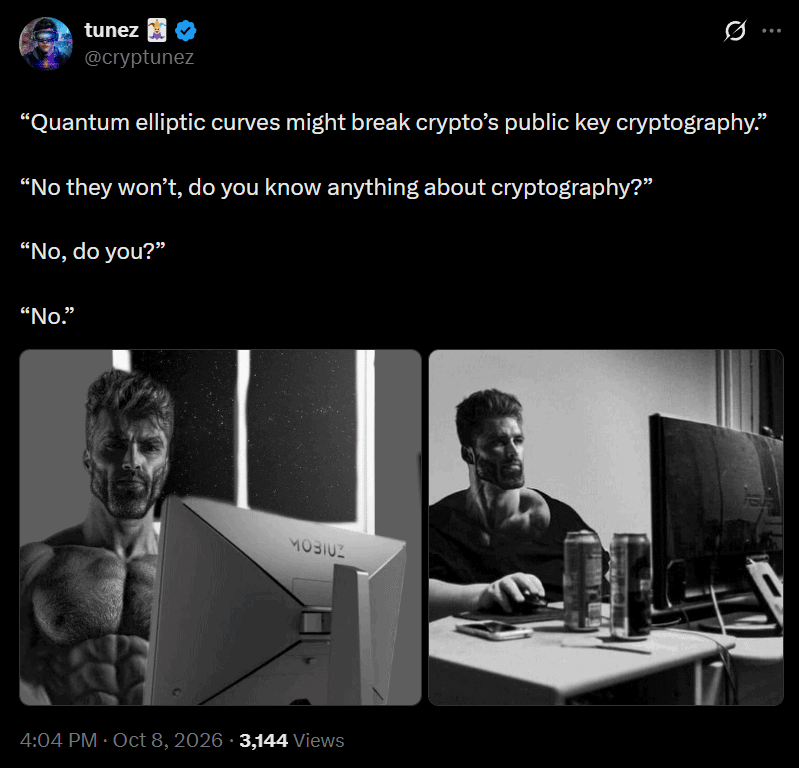
😂 Meme
Until next time,
Edgy
Today’s email was written by Edgy and Yayya.
DISCLAIMER: I’m NOT a financial advisor. This content is for education and information purposes only. Crypto and DeFi are risky and speculative. Please do your research before investing.
Whenever you’re ready, here’s how we can help you:
- 🚀 The DeFi Edge Ventures – We identify, invest, and help amplify DeFi Protocols that positively impact the Crypto space.
You’re receiving this email because you signed up for my newsletter. You can update your Preferences or Unsubscribe here.
600 1st Ave, Ste 330 PMB 92768, Seattle, WA 98104-2246