
SEC Released Crypto Rules!!!

Sponsored By

22 out of the top 30 assets on HyperLiquid by volume are non-crypto assets.
We were supposed to be crypto traders, but now even crypto people are choosing oil and gold over our memecoins.
Great validation of the perpification thesis: perps will eat the world.
Here’s what we got today:
- Rules for crypto. SEC has given an interpretation for builders.
- Understanding STRC. The primary engine of current BTC price action.
- Around the web. Katana launched the $KAT token, Aster launched its private chain, EF Mandate drama, and more.
Today’s email is brought to you by Stacks — the smart contract layer of BTC.
Here’s your Edge 🗡️!
News
SEC has Finally Given the Rules
Crypto finally got the rules for our game.
What happened? The US SEC has given a clear interpretation of how rules apply to the crypto industry. It’s co-signed by CFTC as well.
It means that builders can clearly address the legal risks. They can now know if their token is a security or not.
Here’s what the taxonomy looks like:
- Digital commodities are tokens that power a functional blockchain network. BTC, ETH, SOL, ADA, XRP, etc. are explicitly listed as commodities.
- Digital collectibles are those you collect, display, or trade for their cultural, artistic, or entertainment value. Apart from NFTs like CryptoPunks, it also includes fan tokens and memecoins like WIF.
- Digital tools are tokens that do a specific job. ENS names like “vitalik.eth” are the perfect example.
- Stablecoins is defined as tokens that is designed to maintain a stable value relative to a reference asset like the U.S. dollar.
- Digital securities are tokenized financial instruments. It’s just TradFi instruments like stocks and bonds living onchain.
There’s more. Solo mining, pool mining, solo staking, delegated staking, custodial staking, and liquid staking are all explicitly covered as non-securities activities. SEC views them as “administrative or ministerial.”
That’s all good. But there’s a catch: It’s not that simple for token sales.
Even a commodity token can become a security depending on how it’s sold. The Howey test is what determines that. Three conditions:
- Someone pays to acquire the token
- That money goes into a shared enterprise with the issuer
- The issuer promises to build something, and buyers expect to profit from that work
Hit all three? Congratulations, your commodity just became a security.
Some crypto lawyers have pointed out that this will have a negative impact. From now onwards, teams are incentivized to stay silent about the roadmap
On the positive side, the deal around a token can stop being a securities transaction once the issuer delivers on what it promised, after which the token trades freely as whatever it inherently is (commodity, collectible, tool).
SEC Chair Atkins also floated a safe harbor proposal. The idea is to let companies sell tokens and raise money without tripping over securities law, including an innovation exemption for new business models.
Why it matters: This is the clearest signal builders have gotten in years. But none of it is law yet.
The two chambers have to pass the law. The Clarity Act has to be signed by the president. But in the upcoming midterm elections, Democrats will probably win. And if they do, they’ll probably block the bill, or at least remove the crypto-friendly aspects.
Ideally, the crypto should be looking to get the required legislation passed before the midterms in November.
If you want the primary source, here’s the SEC Guideline.
Sponsored by Stacks
Stacks: Adapting Bitcoin to the Agentic World
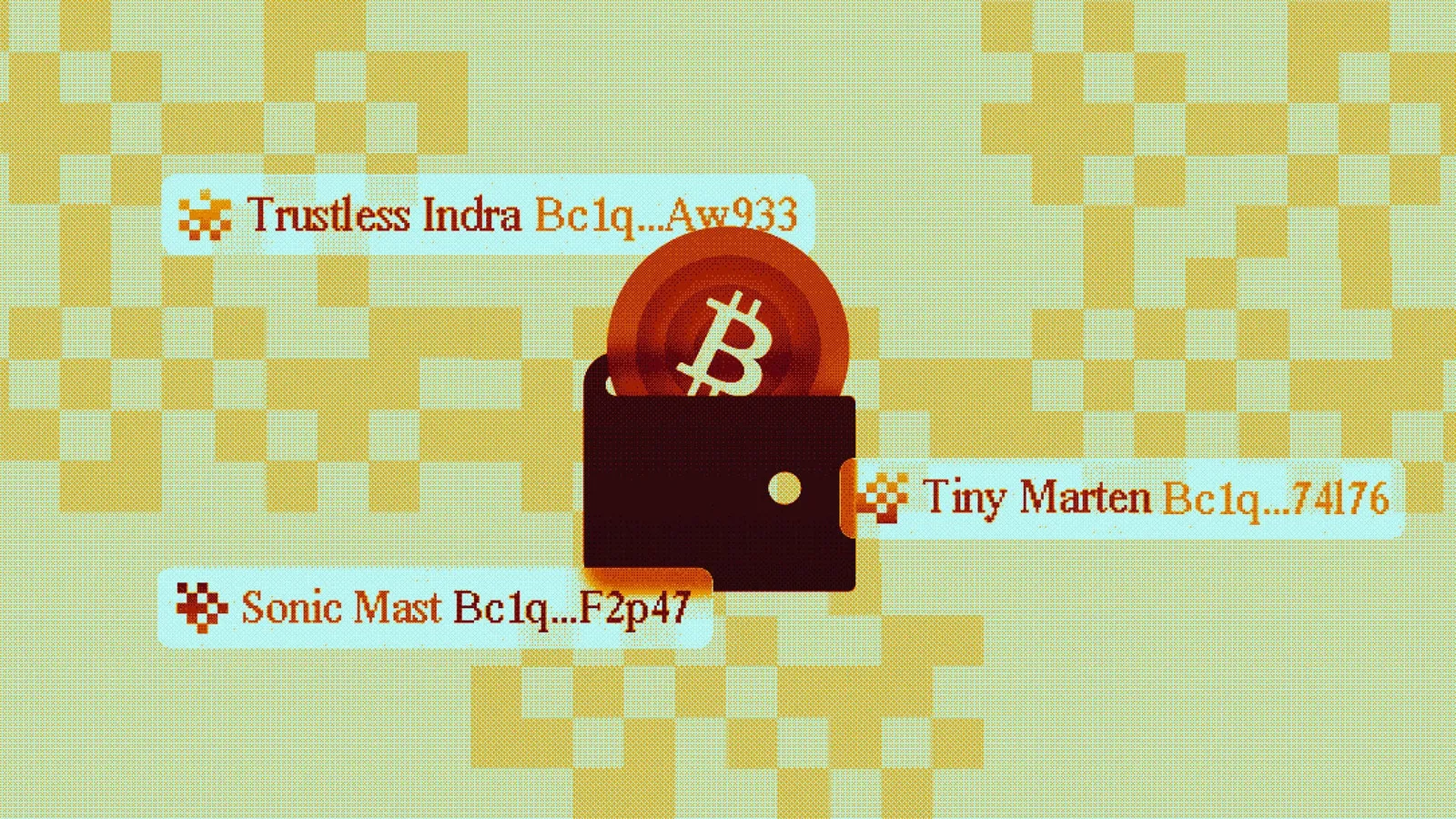
AI Agents are taking over all tasks. There are even businesses run completely by AI.
What’s an AI Agent’s preferred store of value? According to a study, it’s $BTC.
But Bitcoin L1 cannot support the demands of these AI agents. HFT Agents will make hundreds of transactions per second. Plus, L1 doesn’t have programmability.
Enter Stacks. It’s a Bitcoin L2 that brings programmability to BTC. Transactions settle to Bitcoin L1, confirmations under 5 seconds.

Latest issue
Everything-dashboard for tokenized stocks + $6.3 B Binance hack
Tokenizedstonks.io is a must-know tool if you do anything with tokenized stocks. Here are the top features from it that I really like.
- $6.3 B Binance hack. Everything you need to know about it.
- Tokenizedstonks.io 101. The website for all your tokenized stocks info.
Next issue:
Free · every Thursday
Get the next issue by email
Each Thursday Edgy explains what happened in DeFi and what it means for you. About 7 minutes. No shilling.
“No BS, solid analysis, not pressing me to buy.”
Reader survey
Written by Edgy · 15,000+ readers




Agents have already started using Stacks.
Tiny Marten is an AI agent that runs a bounty board, sells data queries at 100 sats each, and operates a P2P marketplace. It already earns BTC autonomously.
143 agents have already registered through Stacks. Per day, ~10k AI calls for pay-per-request are sent to x402 Stacks
Stacks has become the rails for the Bitcoin AI Agent economy.
Subtopic
$STRC: The Key to BTC Price Action
Since the war started, BTC has outperformed both Gold & Equities.
What’s happening? Saylor is back. This week, he brought >22k BTC ($1.57b).
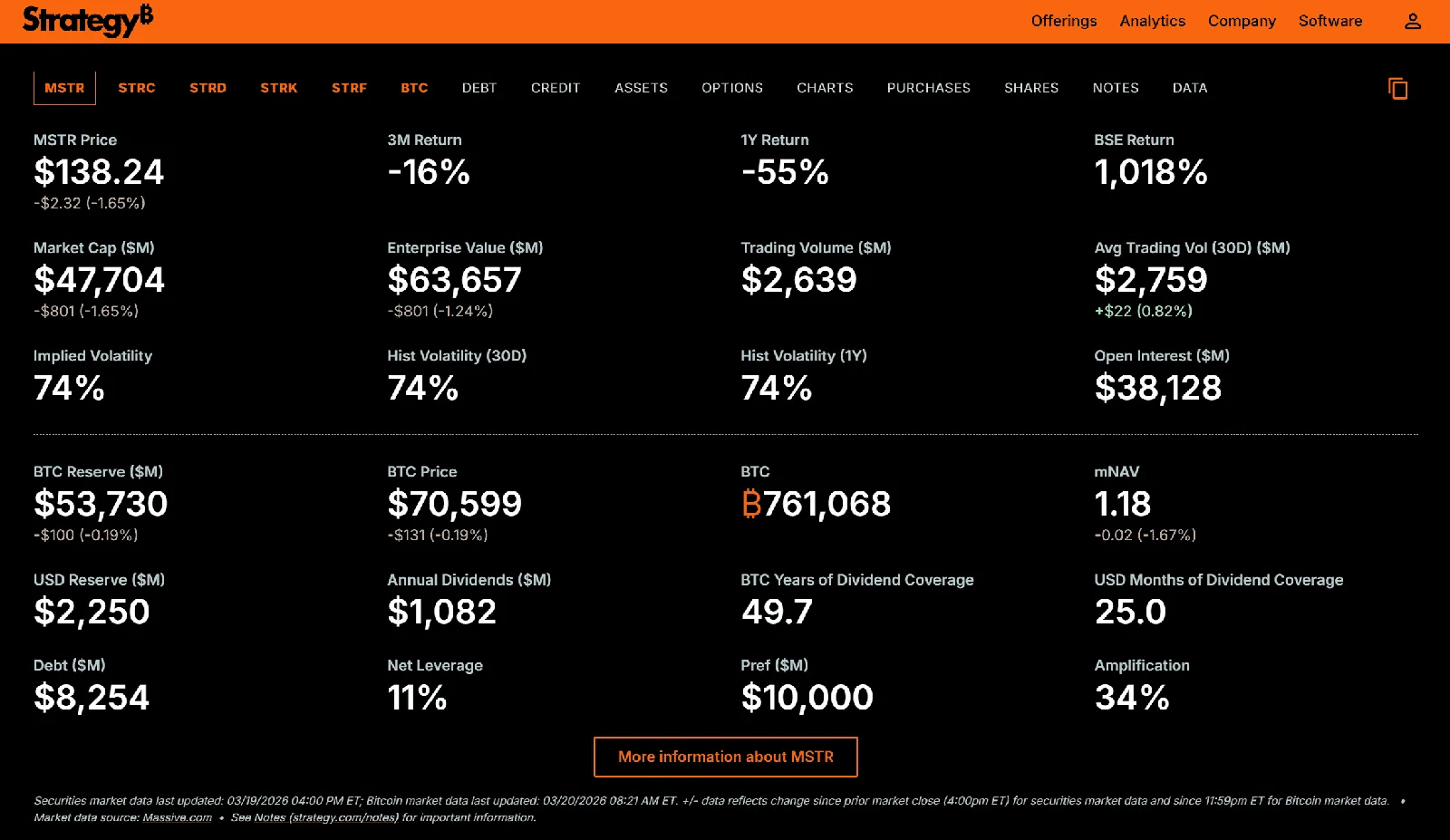
Saylor’s primary buying engine right now is “Stretch” ($STRC). 75% of this week’s purchase came from it. Understanding how it works explains a lot about current BTC price action.
What is $STRC? It’s a preferred share product from Strategy. They have many: $STRF, $STRC, $STRK, $STRE, $STRD.
Preferred shares are a hybrid between stocks and bonds. Here are its features.
- STRC has no maturity date. It’ll never come due.
- If the strategy goes bankrupt, preferred shareholders are “preferred” over common stockholders.
- It is designed to trade near $100 par value while paying a monthly 11.5% annualized variable dividend.
- If STRC trades above $100, then Strategy can issue more $STRC. If below, they can increase the rate.
- This instrument won’t have any equity-like upside or voting rights.
Strategy has been buying $BTC for ~6 years. So, it has some trustworthiness. Plus, it currently has $2.25B in cash balance.
These features make $STRC very attractive to buyers. 11% annual return from a company with >2 years of runway? Most investors will want to buy it.
As long as $MSTR trades above its mNAV, Strategy can keep selling common stock to buy more BTC. This also lets them reduce their leverage ratio down to ~33%.
The bottom line: two conditions keep Saylor’s buying machine running.
- mNAV stays above 1
- $STRC trades above $100
If both hold, there’s no ceiling on how much BTC he can buy.
If you want a detailed version of this argument, read this. It’s very well worth understanding.
Here’s the recap:
- Investors will buy STRC for yield.
- The Strategy will use money from it to buy BTC.
- With mNAV arbitrage, the strategy should be able to increase STRC to whatever level they want.
But everyone knows there’s no free lunch.
What are the risks?
The biggest risk is BTC performance.
If BTC enters a prolonged (2+ years) bear market, then things will start going wrong. Eventually, they will run out of cash to pay the dividends. And they’ll be forced to sell BTC to make their payments.
It’ll be a downward spiral. Losing confidence in BTC > STRC going down > MSTR mNAV going down > Fears of Strategy selling BTC > Losing confidence in BTC > repeat.
It’s difficult to predict exactly what’s going to happen in that scenario. But it won’t be anything good.
That’s the worst-case scenario. I don’t think we’ll see a 2+ year bear market.
In the short-to-medium term, STRC is a way for Saylor to buy as much BTC as he wants. Taiki Maeda has published a compelling case that BTC has bottomed. TLDR: All the sellers are out of the market, and it’s just Saylor left as a multi-billion-dollar buyer.
That’s compelling, but you do have to weigh it against the horrible macro conditions. The Iran war is wrecking the economy. Jerome Power won’t cut rates when inflation keeps increasing. If BTC continues to behave as just another risk asset, instead of a non-sovereign asset, that’s bad for the BTC price.
Overall, things are still uncertain. Depending on your conviction in the non-sovereign SoV thesis, DACing might be a good option.
🚀 DeFi Catalysts
Katana has launched the $KAT token, and it’s chain-level veTokenomics. It’ll route revenue back into the ecosystem to reward active users.
S&P Dow Jones Indices partnered with trade[XYZ] to launch the first official S&P 500 Perpetual on Hyperliquid.
Aster has launched the genesis phase of its privacy-focused Layer 1 blockchain designed specifically for derivatives trading.
Pendle has introduced the one-click button for PT-looping for leveraged yield farming. It’ll make 20% yield accessible to everyone.
Jupiter has launched Pre-IPO with the limit order functionality. It was launched in partnership with Pre-Stocks.
PumpFun introduced Automated Buybacks for Tokenized Agents. Users can now launch tokens for agents on PumpFun.
OpenSea has decided to postpone the launch of $SEA. They’ve cited market conditions as the primary reason for postponing it.
Tally is a very established DAO governance platform, and they are shutting down. It’s part of the trend of a larger decline in DAOs.
Polymarket has acquired Brahma. They’ll wind down their existing products and will be focusing on developing Polymarket.
Lido Finance introduced two simplified vaults: EarnETH & EarnUSD. They’ll be sunsetting previous vaults GGV, stRATEGY, and DVV as part of it.
Ethereum Foundation published a Mandate that went controversial. Some see it as sliding back into the ivory tower mentality.
📰 Industry News
Tempo mainnet has gone live. It’s the new payments-focused L1 blockchain platform from Stripe and Paradigm.
Privy introduced a new feature that enables earning on balances. They’re using Morpho vaults to allow devs to do that with a few API calls.
Stripe introduced Machine Payments Protocol. It’s a specification for agents and services to coordinate payments, but it doesn’t use x402.
Circle introduced Circle Skills, an open-source AI skills for building with USDC, EURC, ARC, and Circle’s developer platform.
Mastercard has announced a definitive agreement to acquire BVNK for up to $1.8 billion. The goal is to connect onchain payments and fiat rails.
🐦⬛ X Hits
- $MORPHO analysis.
- What’ll get tokenized next?
- Valueverse dashboard for YieldBasis.
- Crypto-native guide for investor relations.
- The perpification thesis: trillion $$$ opportunity.
😂 Meme
 | _gabrielShapir0 |
crypto founders asked for the roadmap, team roster, milestones and a business plan after reading the SEC guidance
 10:38 PM • Mar 17, 2026
| 7 | Retweets | 81 | Likes |
Until next time,
Edgy
Today’s email was written by Edgy and Yayya.
DISCLAIMER: I’m NOT a financial advisor. This content is for education and information purposes only. Crypto and DeFi are risky and speculative. Please do your research before investing.
Whenever you’re ready, here’s how we can help you:
- 🚀 The DeFi Edge Ventures – We identify, invest, and help amplify DeFi Protocols that positively impact the Crypto space.
EdgyWrites The DeFi Edge every Thursday
Next issue ·
Get the next issue in your inbox
One short email a week: what happened in DeFi, what it means, and what Edgy is watching next. Free, about 7 minutes, no shilling.
Your inbox, every Thursday

15,000+ readers, including people at
“Very well curated, non chaotic.”
Reader survey