Guide
The 2026 Crypto OpSec Guide
Last week, a bunch of you asked for an updated opsec guide.
So here it is: the setup I think is best in 2026. It takes 20 minutes to start, and it covers last week’s “math breaking” scare as well.
How people actually get drained
Quick 80/20: almost every drain comes down to one of three things.
- Bad hardware. A tampered device leaks your seed before you’ve stored a single coin. Ledger’s own authenticity check can’t detect physical modifications like this one.
- Bad clicks. A fake Ledger site ranked top on Google with over 1M visits in a month, asking people for their recovery phrase.
- Bad signatures. You approve a transaction you can’t read, or an old token approval gets exploited months later.
The setup below closes all three.
TLDR of the setup
Think of it this way: your funds sit in a vault, and your wallet is just the key to the door.
If a key leaks, you change the lock. The vault and everything in it stay put.
Three steps:
- Build the vault today. 20 minutes max, no hardware needed.
- Upgrade the key to a hardware wallet.
- Add more keys for security.
Each step makes you safer on its own. You don’t need the perfect setup on day one, just one you can upgrade later.
Step 1: Build the vault (20 minutes max)
Get a wallet that simulates transactions. My pick is Ambire. Rabby is the more popular alternative. Before you sign, either one shows exactly what will happen: which tokens leave, which arrive, what you’re approving. If the simulation looks weird, don’t sign. This alone kills most drainer scams.
Deploy a Safe. A Safe is a smart contract wallet, aka the vault. Start with a “1-of-1,” meaning one key opens it.
Because the vault and the key are separate, you can swap keys or add more later without ever moving your funds. Ambire handles the Safe for you from inside the app, so you never have to touch the Safe interface. Deploy it on the chains you actually use.
Create the key wallet, and write the seed down. Pen and paper. Not a screenshot, not your notes app, not a cloud doc. Fancy steel plates can come later.
The key wallet holds nothing. No funds, no gas, no trades. Its only job is to approve what the vault does. If someone gets into it, there’s nothing sitting there to take.
Optional: a gas wallet. A second hot wallet with a few dollars of ETH that submits the transactions your key approves. Ambire’s “gas tank” feature does this for you. Skip it if it’s too much for now.
That’s it. You’re already safer than most of CT.
Step 2: Swap in a hardware wallet
Now replace the key with a hardware wallet. It’s one transaction inside the Safe, and your funds never move. That’s the whole point of the vault.
After this week, three rules on hardware:
- Buy only from the manufacturer’s official store. Ledger is now telling everyone not to buy from unauthorized resellers. No marketplaces. No “sealed” secondhand deals.
- Generate your own seed. If a device ships with a seed already filled in, it’s a scam. Throw it out.
- Read the screen before you approve. Newer devices show transactions in plain English (“send 500 USDC to…”) instead of gibberish. If you can’t read what you’re signing, don’t sign it.
Step 3: Add more keys
Make the Safe a “1-of-2”: either of two keys can open it.
The spare can be a second hardware wallet, or an old phone you’ve factory reset and use for nothing else. Store it somewhere separate and out of easy reach.
This is your insurance. If you lose the main key, or suspect it leaked, the spare lets you lock it out and keep your funds. Don’t use the spare for daily signing. Keep it fresh and boring. (You’ll see why later.)
Want more security? A “2-of-3” setup means a thief needs two keys, not one. But the 1-of-2 already puts you ahead of most.
What about the math breaking?
Quick 80/20 on last week’s FUD: if AI or a quantum computer breaks the math, attackers could work backwards from your public key, which goes on-chain the first time you sign. Most experts don’t think it’s a real concern yet, and I believe smart contract chains like Ethereum and Solana will ship fixes before it is.
Still, the setup helps:
- The vault itself has no key to break. Attackers have to go after your signing keys, and you can swap those in one transaction without moving funds.
- The vault can be upgraded. Ethereum’s plan runs through smart accounts switching to quantum-resistant signatures (EIP-8141, not live yet). A normal wallet can’t do that.
The catch: every key you sign with puts its public key on-chain. That’s why the spare from Step 3 stays unused. It’s the one key you can trust in an emergency.
Habits that beat any device
- Read the simulation every time. Especially the approvals.
- Revoke old approvals every few months. Revoke.cash is a great tool.
- Never type your seed into anything. No website, no support chat, no “verification” form. Nobody legit will ask for it.
- Bookmark sites you regularly use. Never reach a wallet or app through a Google result or ad.
- Keep degen plays separate. Use a throwaway hot wallet for new apps and mints, with only what you’re willing to lose.
- Never copy addresses from your transaction history. Scammers plant lookalikes. Check the full address on your device, and send a small test first.
- Never open files strangers send, and never share your screen. Fake “meeting apps,” game builds, and remote-support requests are the most common way drainers get onto a machine. Be wary of “free signatures” as well.
- Use Delegate.xyz to claim airdrops or access token-gated apps without connecting your vault.
The setup might look like a lot of work. But it only takes ~20 minutes. If you get stuck, just ask AI to help you. Securing yourself is worth the time.
Sponsored by Firelight
Firelight: DeFi’s Protection Layer
Less than 0.14% of DeFi’s ~$92B TVL is backed by onchain cover.
Compare that to your bank. Roughly 57% of US deposits are FDIC-insured. That’s about 400x more protection for money sitting in a checking account.
Worse, hackers are relentless on DeFi. Oracle and price-manipulation exploits hit 32 through August, already a record and nearly triple 2025’s full-year count. And in Anthropic’s tests, AI agents exploited 207 of 405 real contracts in simulation. Finding bugs has never been cheaper.
That’s a lot of risk for a sector asking institutions to show up.
Enter Firelight. It builds cover into the vault itself. The operator switches it on, and every depositor is protected automatically.
A few things that stand out to me:
- Neutral claims. Five independent firms (Hypernative, Native, Credora, GFX Labs and Cyfrin) validate every claim against terms registered onchain upfront. The party paying out isn’t the one deciding.
- Payout capital sits outside the blast radius. Stakers back the cover, so the hack that triggers a claim can’t drain the money that pays it.
- Already live on vaults from Sentora, DeFi’s #2 curator, and Veda and Upshift have wired it in so any vault built on them can turn it on.
It covers named events like exploits, oracle failures, and depegs, up to set limits. Not a blanket guarantee, but the kind of protection DeFi needs to mature to the next level.
Subtopic
The Quantum Report Card: 9 Chains, Graded
After Justin Drake’s viral post about AI potentially breaking crypto’s security, Quantum computing is on everyone’s radar. They’re worried about hackers cracking the keys to their wallets.
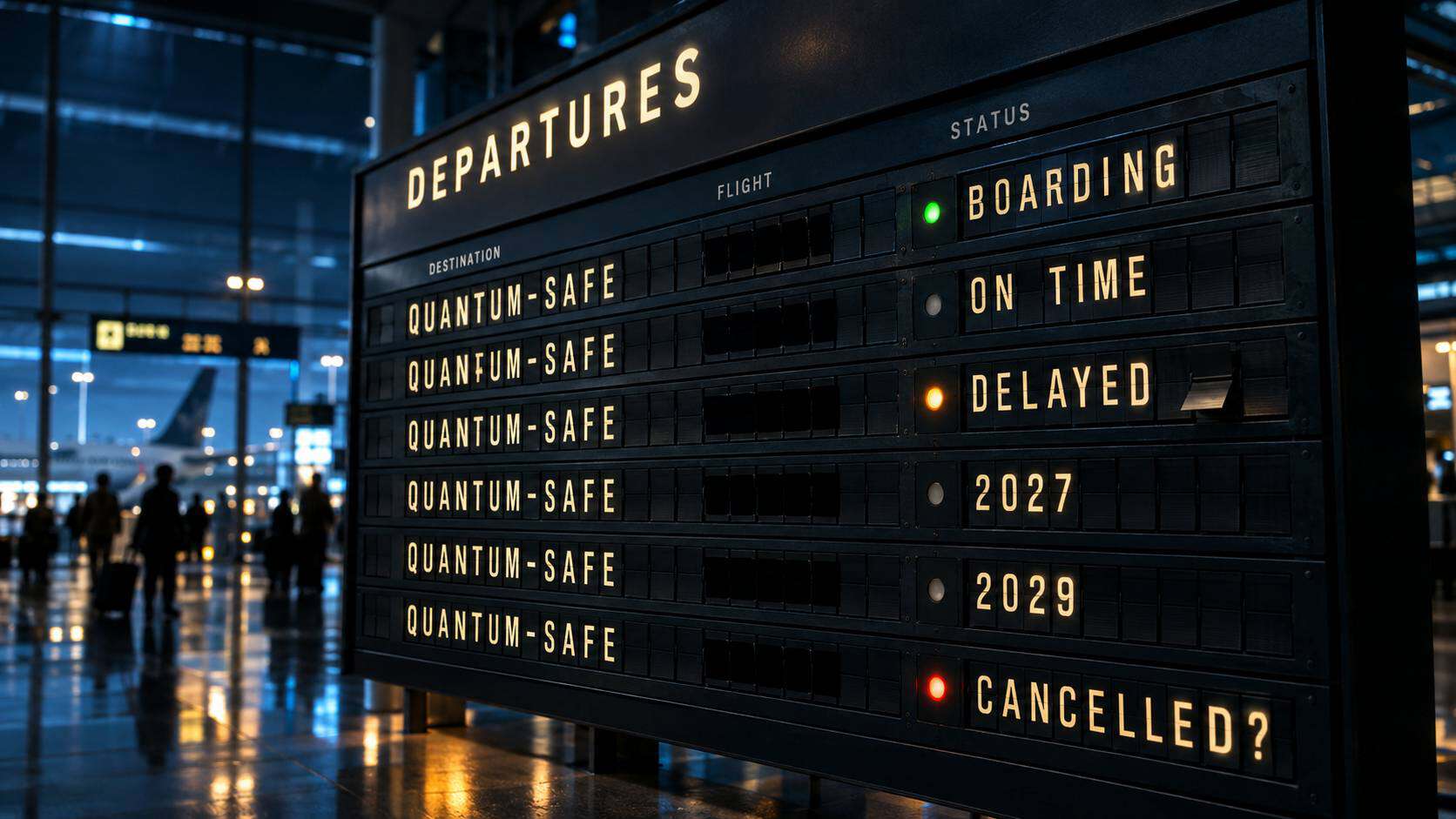
Most projects already have fixes on the way. Here’s where 9 of the biggest names in crypto stand:
1. $ETH: Targeting full quantum resistance by the end of 2029, covering wallets, validators, and the data layer the whole network runs on. It could come faster as well.
It’s also building a way for existing wallets to switch to quantum-safe signatures on their own schedule, so nobody gets forced to move funds all at once.
2. $BTC: Developers are working on proposals like BIP-360 to cut the risk from quantum attacks.
The harder problem is lost coins. Millions of BTC sit in old wallets whose owners will never come back to upgrade, and deciding what happens to them is gonna be ugly.
3. $NEAR: Already supports quantum-resistant signatures through ML-DSA.
You can upgrade your wallet’s security without changing your address or moving your assets, which is a big deal if you’ve got money spread across DeFi.
4. $STRK: Wants to be fully quantum-resistant by 2027. Starknet wallets can already switch to new signature types on their own, but upgrading the network itself still means waiting on Ethereum.
That’s mainly why the team is considering becoming its own L1. Nothing’s decided yet.
5. $QTC: Quantus went the other way. Instead of upgrading an existing chain, it launched in September with quantum-resistant signatures built in from day one, plus Bitcoin-style proof of work and a 21M supply.
The tech is interesting, but it’s a very young network that still has to prove it can attract real users.
6. $TRX: TRON has quantum-resistant signatures running on its testnet.
Justin Sun says they’re ready to bring them to mainnet at any time. I’d watch for when regular users can actually use them.
7. $SUI: Just completed its first native quantum-safe transaction on devnet, using a signature system called ML-DSA-65. Mainnet support is targeted for early 2027.
8. $ZEC: Zcash is working toward quantum resistance through its Tachyon roadmap, and it has a harder job than most. It has to protect funds without breaking the privacy features people use it for, so swapping out wallet signatures won’t cut it.
9. $COIN: Coinbase could matter just as much. They’re working with Bitcoin developers and researchers on how to move existing BTC wallets to quantum-resistant security, and they’ve said the lost-coins question needs its own debate alongside that work.
So how serious is the quantum threat?
Today’s computers can’t realistically break the cryptography protecting Bitcoin and Ethereum wallets. A future quantum (or new AI-discovery-powered) computer might work backwards from a wallet’s public key to its private key and drain the funds.
Nobody knows when that becomes possible. And upgrading billions of dollars of crypto isn’t something you do overnight.
I think the most interesting opportunity here could be the infrastructure that helps existing chains upgrade.
- NEAR users can change their security keys without moving their assets.
- Starknet wallets can adopt new signature systems without waiting for a major network upgrade.
- Then there are the teams doing migration work for existing chains, like Coinbase on the Bitcoin side.
Personally, I’d check three things:
- Is it live? A working mainnet and a roadmap promising 2027 are very different things.
- Can people upgrade easily? Nobody wants to unwind their DeFi positions just to secure a wallet.
- Does the token benefit? A chain getting more secure doesn’t automatically make its token worth more.
Run the list through the first two, and $NEAR is the one name that clearly passes both right now. Everyone else is still on a roadmap or, in QTC’s case, too new to be tested.
Which project do you think is best positioned for the quantum era?
🚀 DeFi Catalysts
Solana just halved its block time. Anza’s 200ms slots went live on October 9, so an epoch now takes about a day instead of two.
Starknet is actively considering becoming an L1 to remove dependence on Ethereum. The goal is to be the first fully quantum-resistant network, with 2027 as the target.
Chainlink launched CCIP Vault Adapters, letting a DeFi vault on one chain take deposits from 80+ chains in one click. Aave, Lombard, Veda, and Venus are already using them.
Robinhood is exploring a Stock Token tied to an actively managed ETF on Robinhood Chain, with T. Rowe Price ($1.9T AUM). If it works, it’d be the first Stock Token of its kind.
Rain launched Rain wallets, a single stablecoin balance you can get paid into, earn rewards on, spend at 175M merchants, and send in 50+ currencies.
LongX is turning hedged trades into tokens you can buy in one click. Its first AI Nexus basket is long AI names, short QQQ, and holders will vote on the composition starting next week.
🆕 New Launches
Papertrade went live on Hyperliquid on October 10, a perps exchange offering 1000x leverage with no orderbook and no funding fees. Every trade settles against a self-funding LP, and $PAPER can only be minted from traders’ losses.
EQX Labs is launching tokenized U.S. stocks and ETFs natively on Hyperliquid, starting with 11 markets. Each token is backed 1:1 by real shares at DTC-connected custodians, with no issuer fees.
🤑 Money Moves
SWI Group raised €800M (~$894M) at a €6.1B valuation to turn Genesis Digital, the former FTX-backed bitcoin miner, into AI data centers.
Orca and Loopscale are merging into Formation, a New York company that wants to finance AI, robotics, and defense businesses through regulated US capital markets. Both protocols will keep running.
SkyAI plans a $3 cash tender of up to ~$201M for 95% of its shares and warrants, funded by selling about half its SOL treasury.
📰 Industry News
Samsung is adding USDC stablecoin transfers directly to Samsung Wallet for eligible U.S. Galaxy users, launching in the last week of October 2026. They’ll use Solana and Sui for the settlement.
Trezor is cutting its reseller network. Unvetted partners lose authorization on January 1, 2027, after Ledger found spy implants in devices sold through a reseller.
S&P has its first onchain derivatives swap. DRW and Marex traded an OTC total return swap on Canton, referencing a tokenized S&P iBoxx bond index.
Binance is shutting down Binance Pool and Cloud Mining on November 10. Miners have four weeks to move their hashrate.
China is reportedly calling for a national blockchain network, built alongside a nationwide integrated computing network.
🚨 Rekt Report
Ledger devices sold through CryptoBilis, a Southeast Asian reseller, shipped with a hidden implant that read the 24-word seed off the screen during setup and texted it out over LTE. On-chain investigators trace $86M+ in losses. And the vulnerability might not be confined to CryptoBills. Ledger hasn’t verified the figure.
79thVault‘s 79AU pool was drained of 16.2K BNB (~$12.5M) through a privileged sell function. Reportedly, the hacker sent back 15,000 BNB (~$11M) less than 24 hours after the hack, following onchain negotiations.
Edgen, an AI copilot for crypto and stock investors, shut down on October 12. All accounts are closed, and its X account is suspended.
📉 Down Bad
Blur is deprecating its frontend on November 12, 2026. The marketplace protocol stays live onchain, and $BLUR keeps control of the fee switch.
Relay is retiring its Vaults. New deposits are off, and the withdrawal page closes December 31, 2026, after which you can still withdraw straight from the contracts.
XRP Ledger patched a decade-old overflow bug that could have minted trillions of XRP from nothing. Veria Labs found it with an AI agent and got the max $250K bounty.
DWF Labs affiliates sued BitGo for $141M in London’s High Court. They say BitGo bought FF and ESPORTS tokens at a discount under a 3-month lock-up, then sent them to exchanges early.
Based, the Singapore crypto card app, disclosed a breach of its card program dashboard. Names, passport/NRIC numbers, addresses, phone numbers, and linked wallet addresses were exposed.
🐦⬛ X Hits
- Deep dive into Papertrade.
- The cockroach-maxxing strategy.
- Tulip King’s list of coins worth researching.
- State of crypto inference providers.
- Your coins are safe from quantum and AI.
😂 Meme
Until next time,
Edgy
Today’s email was written by Edgy and Yayya.
DISCLAIMER: I’m NOT a financial advisor. This content is for education and information purposes only. Crypto and DeFi are risky and speculative. Please do your research before investing.
Whenever you’re ready, here’s how we can help you:
- 🚀 The DeFi Edge Ventures – We identify, invest, and help amplify DeFi Protocols that positively impact the Crypto space.
You’re receiving this email because you signed up for my newsletter. You can update your Preferences or Unsubscribe here.
600 1st Ave, Ste 330 PMB 92768, Seattle, WA 98104-2246